






Hydraulic vs Electric Press Brake: Key Differences Explained
When comparing hydraulic vs electric press brake machines, the core distinction lies in their power sources and performance capabilities. Hydraulic press brakes deliver immense force through fluid pressure, making them ideal for heavy-duty bending of thick metals in high-volume production. Electric press brakes (also known as servo-electric press brakes), powered by servo motors, prioritize precision, energy efficiency, and speed for intricate bends on thinner materials.
Understanding these hydraulic vs electric press brake differences helps fabricators select the optimal machine for cost savings, accuracy, and productivity. This guide draws from AMT 2023 report (p.12) and Fabtech 2022 benchmark study, breaking down key factors. Per ISO 16092-1 safety standards, both types integrate advanced CNC controls for reliable operation.
What Is a Hydraulic Press Brake? (CNC Hydraulic Press Brake Overview)
A CNC hydraulic press brake uses pressurized hydraulic fluid to drive the ram. It generates consistent, high-tonnage force for bending operations. These machines excel in industrial settings requiring robust power, with typical capacities of 300-2,000 tons (e.g., 400-ton Durma models with Syncro-form linkage system).
How Hydraulic Press Brakes Work: Step-by-Step
- Variable displacement piston pumps (20-50 L/min flow) pressurize oil.
- Proportional valves control ram speed and position.
- Cylinders lower the ram with smooth, controllable force up to 2,000 tons.
Core advantages include: This setup handles thick steel plates effortlessly.
Advantages of Hydraulic Press Brakes
- Superior force for heavy materials: Handles 50mm+ thick steel at 800 tons (e.g., bending 25mm AR400 steel at 750 tons/hour).
- Versatile tooling compatibility: Supports standard and custom dies for diverse jobs, with high press brake bending force.
- Proven reliability: 20,000+ hour lifespan in large-scale manufacturing, like automotive frames.
Hydraulic press brake vs servo-electric favors hydraulics for raw power in press brake tonnage comparison.

What Is an Electric Press Brake? (Servo-Electric Press Brake Explained)
A servo-electric press brake employs servo-electric motors and ball screws (5-10mm pitch, up to 50 kNm torque for 100-ton models) to control the ram’s movement. It delivers zero-play motion for ±0.005 mm ram positioning accuracy (per ISO 16092-3).
How Servo-Electric Press Brakes Operate: Step-by-Step
- Servomotors activate only during bending cycles.
- Ball screws convert rotary motion to linear ram travel.
- Closed-loop feedback ensures 0.001 mm repeatability (per DIN EN ISO 230-2 test conditions).
Key benefit: This eliminates fluid delays, enabling rapid positioning for CNC servo press brake precision.
Key Benefits of Servo-Electric Press Brakes
- Precision-driven performance: ±0.02° angular accuracy for aerospace titanium parts.
- Energy savings: Up to 60% less power per AMT 2023 studies.
- Low maintenance: 50,000+ hour lifespan with minimal lubrication on servo-driven press brakes.
For a deeper dive into the working principle and key advantages of electric press brakes, see our related article: Working Principle and Advantages of Electric Press Brake.
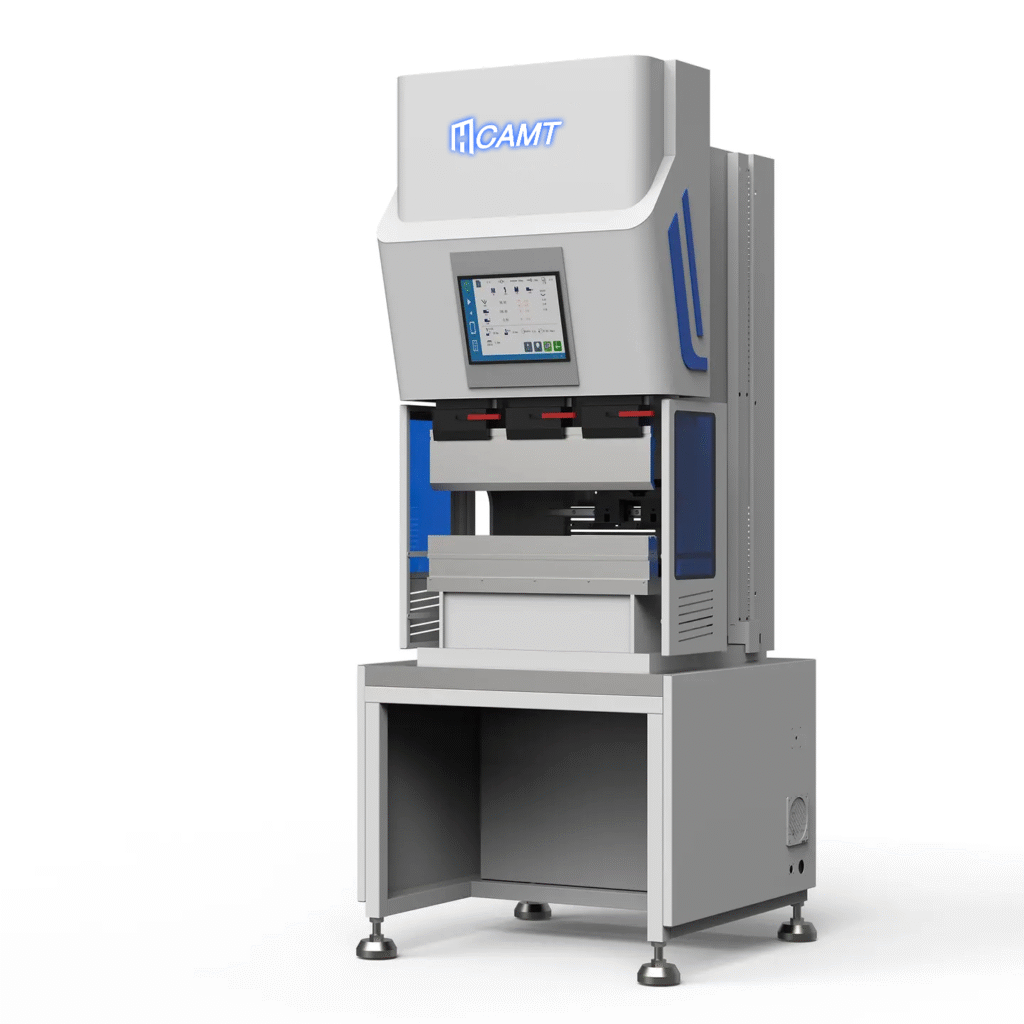
Hydraulic vs Electric Press Brake: Head-to-Head Comparison
Hydraulic vs Electric Press Brake Energy Efficiency
Servo-electric press brakes consume power only when bending (10-20 kW peak). They slash energy use by up to 60% vs. hydraulic models (15-45 kW continuous), per Fabtech 2022 reports. This supports EU energy regulations and cuts utility bills.
For an objective academic analysis with direct comparison tables on energy, maintenance, noise, and force scaling, refer to this 2025 University of Porto master’s thesis: Development of the Actuation System for Electric Press Brakes.
Precision and Accuracy: Electric vs Hydraulic Press Brake
Electric presses hit 0.001 mm closed-loop feedback repeatability for complex geometries. Hydraulic systems achieve 0.01 mm but face fluid viscosity issues. Servo-electric press brake advantages shine in high-value parts during hydraulic vs electric press brake comparisons.
Speed and Cycle Times: Hydraulic vs Electric Press Brake
Hydraulic press brakes offer fast approach speeds (100-200 mm/s) and return speeds (100-150 mm/s) for bulky jobs. Servo-electric variants deliver 200-500 mm/s, reducing cycles 30% (e.g., 15s to 10s on 2mm aluminum).
Press Brake Tonnage Comparison and Key Specs
Key hydraulic vs electric press brake tonnage comparison
| Feature | Hydraulic Press Brake | Electric Press Brake |
|---|---|---|
| Max Tonnage | 300–2,000+ tons (e.g., Trumpf, Amada) | 100-500 tons (emerging models up to 700 tons, e.g., Bystronic, Salvagnini) |
| Stroke Length | 300-600mm | 200-400mm |
| Power Draw | 15-45 kW continuous | 10-20 kW peak |
| Lifespan | 20,000 hours | 50,000+ hours |
| Approach Speed | 100-200 mm/s | 200-500 mm/s |
When choosing tonnage, many shops face the common dilemma of whether a 100-ton or 160-ton model is sufficient. For practical guidance on this decision, read our article: 100 Ton vs 160 Ton Press Brake: Which One Do You Need.
Maintenance and Operating Costs: Hydraulic vs Electric Press Brake
Hydraulic press brakes require oil changes, seal checks, and leak fixes—averaging 10-15% annual downtime. Servo-electric presses have fewer parts, cutting costs 40-50% with 3-5% downtime.
Noise, Environment, and Safety: Hydraulic vs Electric Press Brake
Hydraulics hit 80+ dB with spill risks; servo-electrics run <70 dB, leak-free, per ISO 16092-1.
Ideal Applications for Hydraulic vs Electric Press Brake
Heavy-Duty Hydraulic Applications
| Material/Job | Thickness | Recommended Type |
|---|---|---|
| Ship hull plates (AH36 steel) | 20-50mm | Hydraulic |
| Truck chassis (mild steel) | 10ga | Hydraulic |
| Automotive frames | 20mm steel | Hydraulic |
| Structural beams | 25mm+ | Hydraulic |
Precision Electric Applications
| Material/Job | Thickness | Recommended Type |
|---|---|---|
| Medical device housings (stainless) | 0.5-3mm | Electric |
| EV battery trays (aluminum) | 1-2mm | Electric |
| Aerospace titanium | ±0.02° bends | Electric |
| Electronics enclosures | 0.5-2mm | Electric |
Servo-hydraulic hybrids (100-500 tons) offer 50% energy savings for balanced needs.
Hydraulic vs Electric Press Brake: Which Should You Buy?
- <50 bends/day: Electric for precision and savings (ROI in 18-24 months). Pros: Low noise, energy efficiency. Cons: Lower max tonnage.
- >200 bends/day: Hydraulic for power. Pros: High tonnage. Cons: Higher maintenance.
- Balanced needs: Hybrids (McKinsey 2023: 25% electric growth in U.S. fabs).
For practical insights on evaluating press brake needs in real fabrication shops (from the leading U.S. metal manufacturing association), see this guide from The Fabricator (FMA): Press Brake Buying Guide for Metal Fabrication Shops.
Conclusion: Mastering Hydraulic vs Electric Press Brake Choices
The hydraulic vs electric press brake debate balances power, precision, and efficiency. Hydraulic press brakes dominate heavy-duty tasks; servo-electric press brakes lead in agile operations. Factor in your workflow for maximum ROI.
FAQ: Hydraulic vs Electric Press Brake
Which is better for thick steel: hydraulic or electric press brake? Hydraulic excels for 300+ ton needs and thick materials due to superior bending force.
What are electric servo-electric press brake advantages? They offer 60% energy savings, micron-level precision, and lower maintenance for precision jobs.
What is the cost difference between hydraulic and electric press brakes? Electrics save $10K/year in energy on 500-ton equivalents, with 40-50% lower maintenance—ROI in 18-24 months.
Press brake tonnage comparison for my shop? Hydraulics suit 300+ tons; electrics up to 500 tons. Match to material thickness and volume.
Are servo-electric press brakes faster? Yes, with 200-500 mm/s speeds vs. hydraulics’ 100-200 mm/s, cutting cycle times 30% on thin sheets.