






Traditional ARC Welding
Heavy Duty Super Press Brake

Traditional ARC Welding
Heavy Duty Super Press Brake
Long&Thicker Sheet Metal Processing Best Solution
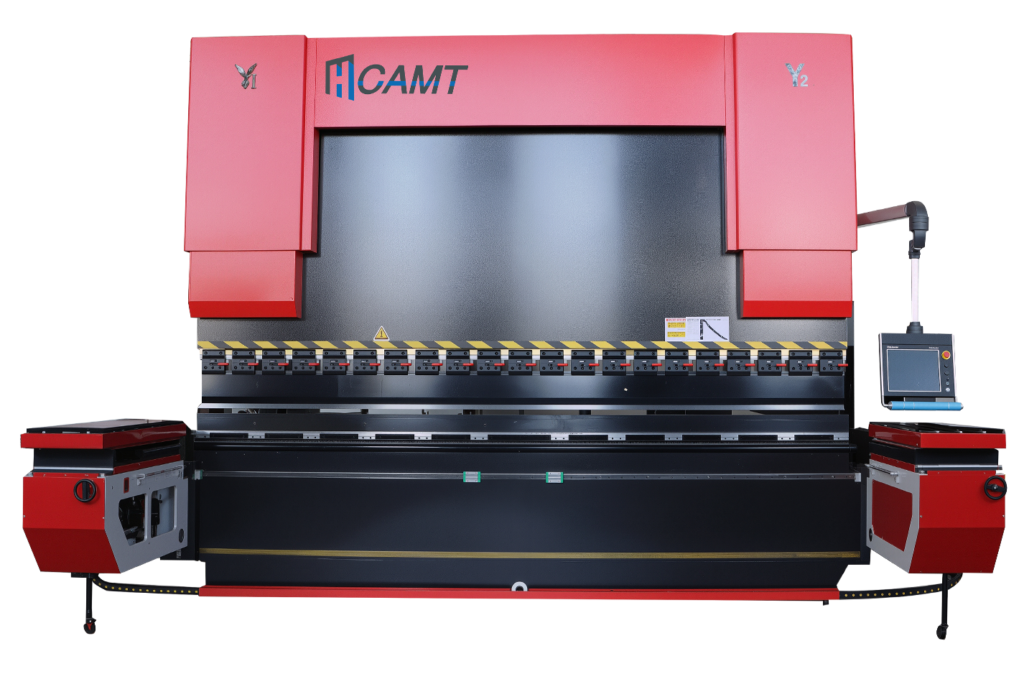
CAMT®️heavy duty super press brakea high-performance hydraulic or CNC-controlled bending equipment designed for processing large and heavy metal plates, widely used in heavy industry.Indicates a maximum bending force and a longer worktable length . Typically equipped with an electro-hydraulic servo system or full CNC system, it features high-precision sensors, servo valves, and advanced control software to achieve high-accuracy bending of metal plates.Similar heavy-duty CNC bending machines, have a robust welded steel frame (usually made of Q235 A1 high-strength steel) capable of withstanding high loads and continuous operation.
It is suitable for processing thick carbon steel, stainless steel, aluminum alloys, and other materials, with a maximum bending thickness typically ranging from 10-12 mm (for carbon steel, depending on material and mold configuration).
High toughness,High wear resistance
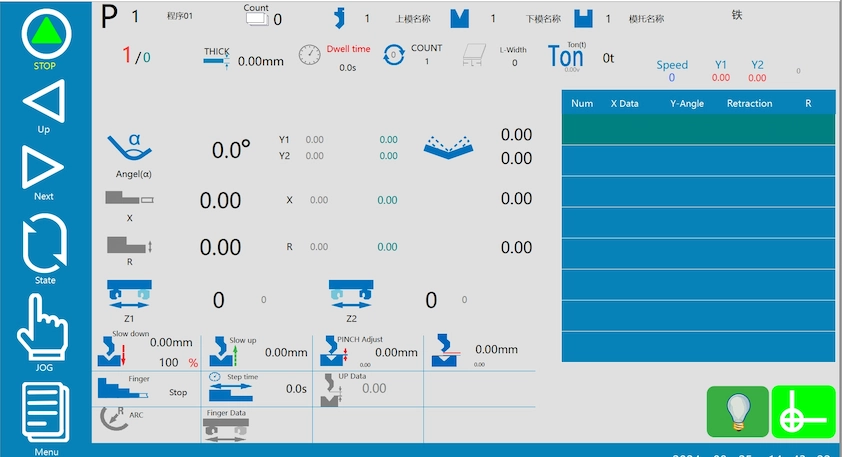
- 21.6-inch color high-definition touch screen with friendly human-machine interface
- FEA & Stress Analysis of Small Press Brake
- 4 V Double CNC die series &835mm punches
- High Precision & Multi Point Mechanical Crowning
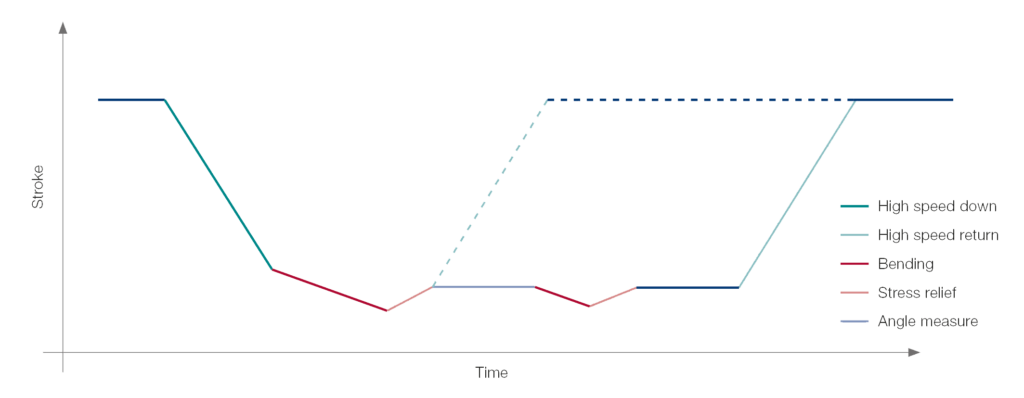
- VICHI Servo Drive Theory
- FULL Close-loop High Performance Hydrauic System
- All-In-One Effective Servo Motor
- Graphite Self-lubricating Copper Plate
- In this system, the servo motor directly drives the reducer and lead screw, enabling rotational motion. The lead screw nut, driven by the screw’s rotation, moves vertically, actuating the slider. The slider, in turn, drives the upper mold to perform vertical movements, facilitating precise sheet metal bending. This direct-connection mechanism enhances operational efficiency, reliability, and precision while maintaining a cost-effective and compact design, making it an ideal solution for modern sheet metal processing.
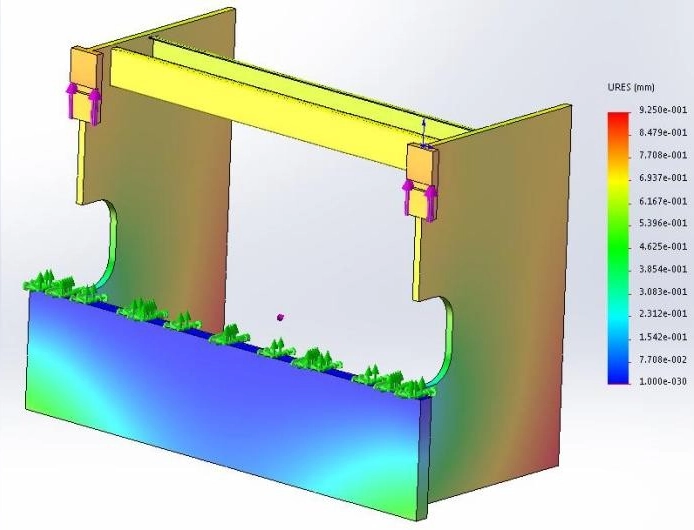
FEA & Stress Analysis of Press Brake
FEA accurately predicts stress distribution patterns, deformation characteristics, and load-bearing capacities under various operating conditions. This advanced analytical approach enables engineers to identify and reinforce potential weak points in the frame, ram, and bed assembly while optimizing material usage through topology optimization techniques. The analysis specifically targets critical performance factors including ram deflection compensation accuracy, structural vibration damping, and fatigue resistance under cyclic loading conditions. Through iterative simulation processes, FEA facilitates the development of press brakes with enhanced rigidity-to-weight ratios, improved energy efficiency, and prolonged service life.
DataM or Iris-Plus angle messurement management(options).
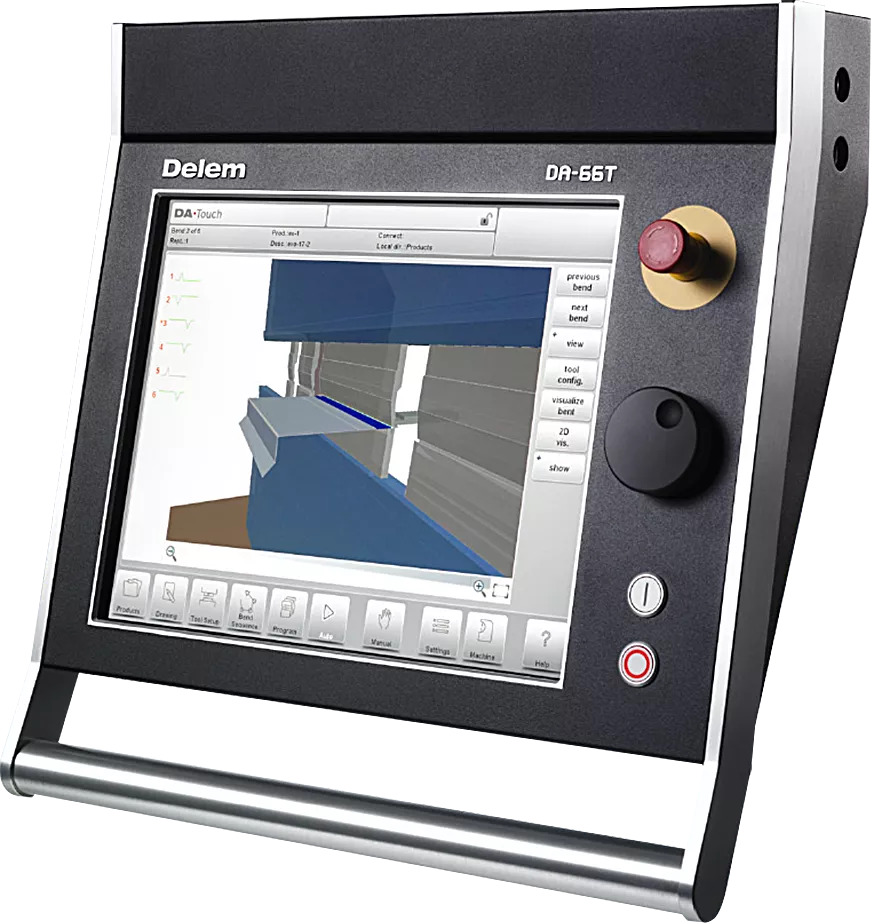
15” color graphic with fully touch screen
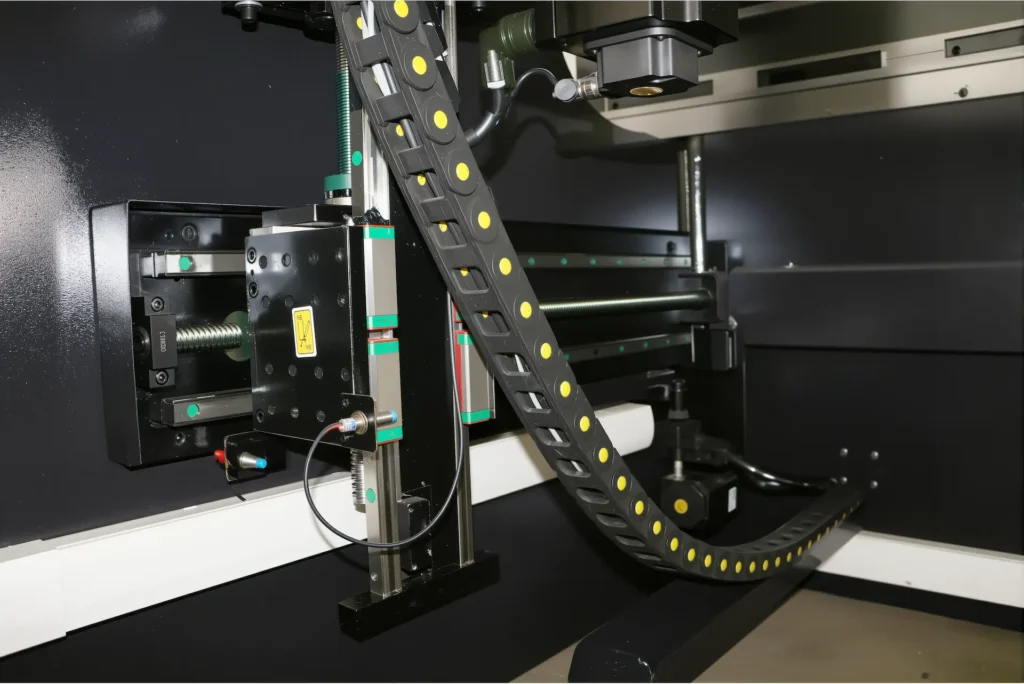
- Up to 6 axes (Y1,Y2 , X, R ,Z1 , Z2-axes)
- Automatic bending sequence calculation
- Tandem management.
- VisiTouch 2D or VisiTouch MX offline software.
- CYBELEC VisiTouch 19 2D and 3D graphical CNC System
- Modulable tools for each part or bend.
- 19” touch screen modern streamlined glass surface
- Easy operating thanks to the user-friendly HMI
Tandem machine management(option, can up to 4 machines)
ESA S650W 2D Graphical CNC System
- No limit in both performances and flexibility.
- "The powerful built-in Pc allows having on the machine a real 3D cad cam (metallix, radan, esa)
- Finger-tip work piece design.
- Direct import of tools shapes (.dxf files) and management of tool library.
- Tool and die holders management.
- Angle measurement and correction with all existing devices is available.
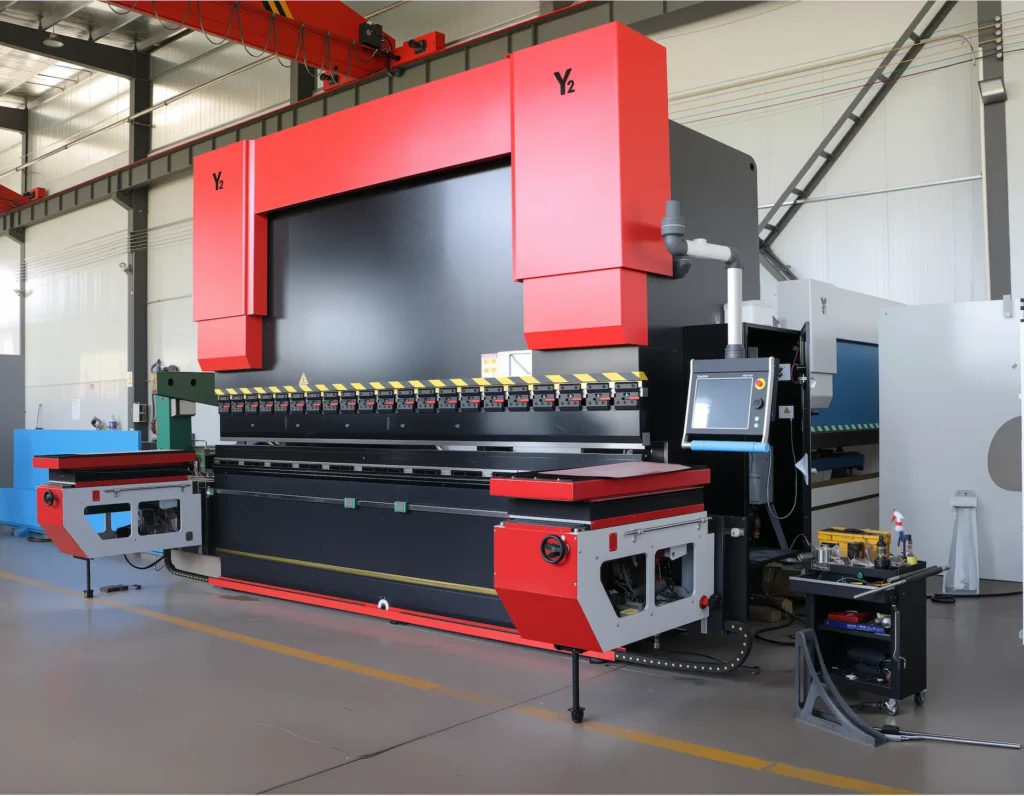
Heavy Duty Structure Bending Machine
High Strength & Stability Large Press Brake
designed for processing large workpieces, accommodating ultra-long , wide, or heavy plates, and is widely used in manufacturing for ships, bridges, steel structures, wind turbine towers, and pressure vessels. It supports complex shape processing through CNC programming, enabling multi-angle and multi-stage bending to meet intricate geometric requirements. High-precision production is ensured by synchronous control and backgauge systems, maintaining consistent bending angles and dimensions for industrial components with stringent accuracy demands. The machine facilitates batch production with multi-program storage making it suitable for mass production or single-piece customization. Its versatility spans multiple industries, including steel structures, rail transportation, aerospace, and energy equipment, processing components such as lamp poles, carriage panels, and building curtain walls.
Optional Safety Arrangement - Light Curtain
- Electro-hydraulic servo system and grating ruler feedback ensure slider synchronization accuracy within ±0.01 mm
- High backgauge positioning accuracy (±0.05 mm), ideal for precision parts production
- Automatically calculates bending force and stroke, reducing setup time and supporting quick mold changes and programming
- Supports various mold configurations to meet different thickness and material processing needs
- Optional features like automatic mold changing, variable V-groove molds, and automated loading/unloading systems enhance production automation
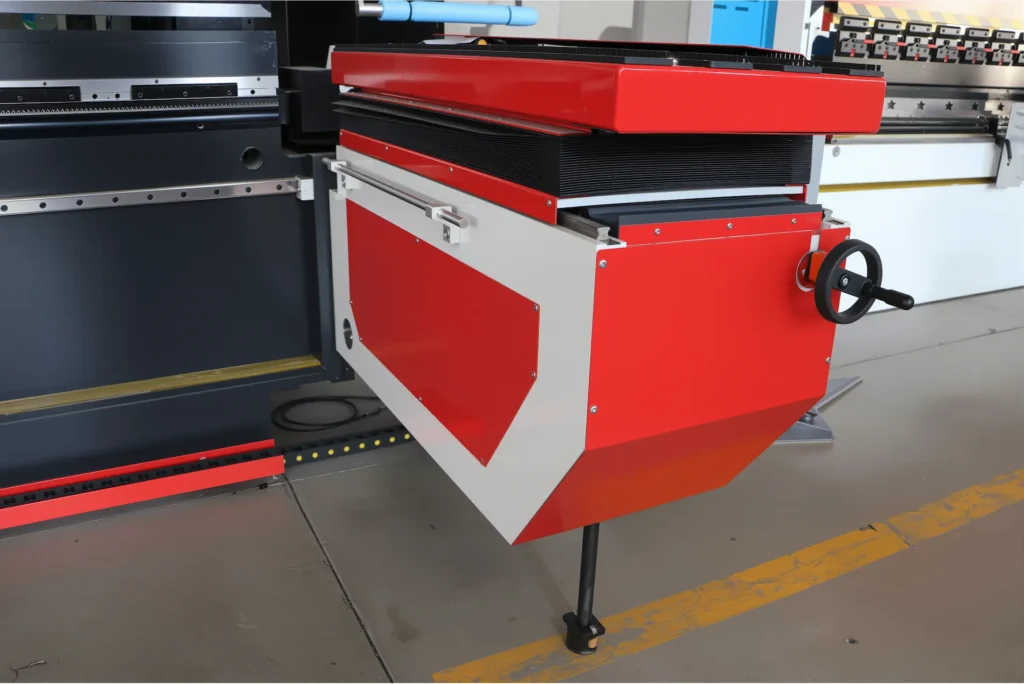
Bending Follower
Role and Advantages of the Follow-Up Device in Bending Machines
Press brake bending Follower(also known as a follow-up support or material support) primarily assists in processing large or thin workpieces by providing a synchronized support platform that moves with the slider to hold the plate, preventing sagging or deformation due to its weight or bending force. The device automatically adjusts its height and angle based on the workpiece size and bending angle, ensuring stability during processing. Its advantages include improved processing accuracy (avoiding angle deviations), enhanced workpiece quality (reducing surface scratches or deformation), increased safety (reducing operator workload), and wide applicability (suitable for ultra-long or ultra-thin plates), making it highly effective in large-scale plate bending for industries like shipbuilding and steel structures.
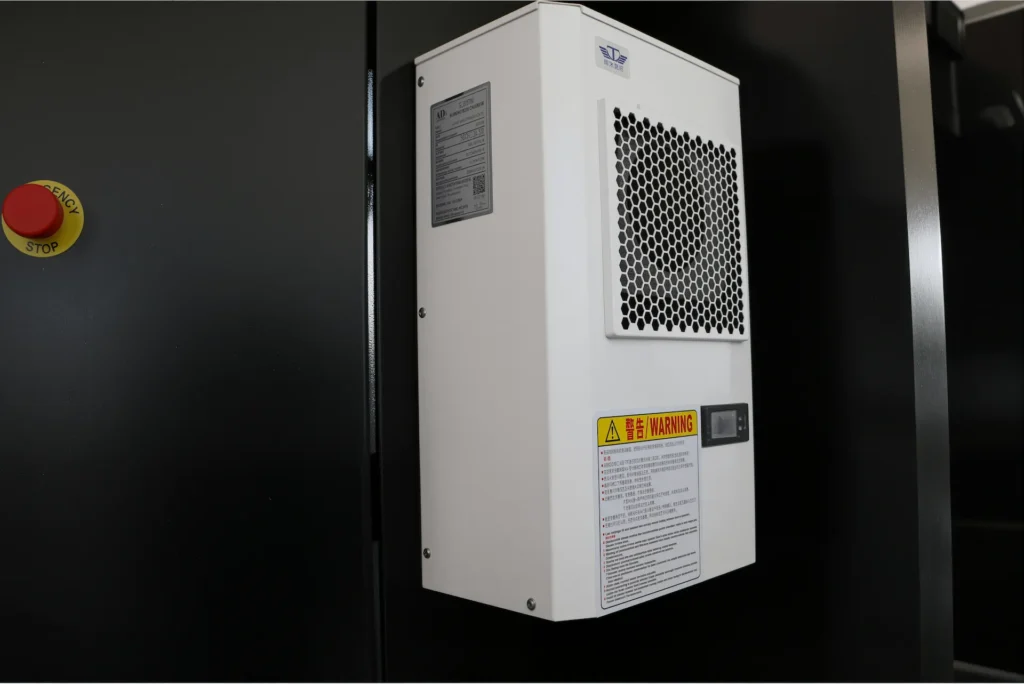
Industrial Air Conditioning in Bending Machine Operations
- Provides comfortable temperature and air quality for operators, reducing thermal stress and boosting work efficiency
- Reduces equipment failure rates and lowers maintenance costs
- Modern industrial air conditioners use inverter technology and heat recovery to minimize energy consumption
- Customizable to suit various workshop environments and meet the needs of different bending machines
- Stable conditions minimize risks of equipment overheating or operational errors
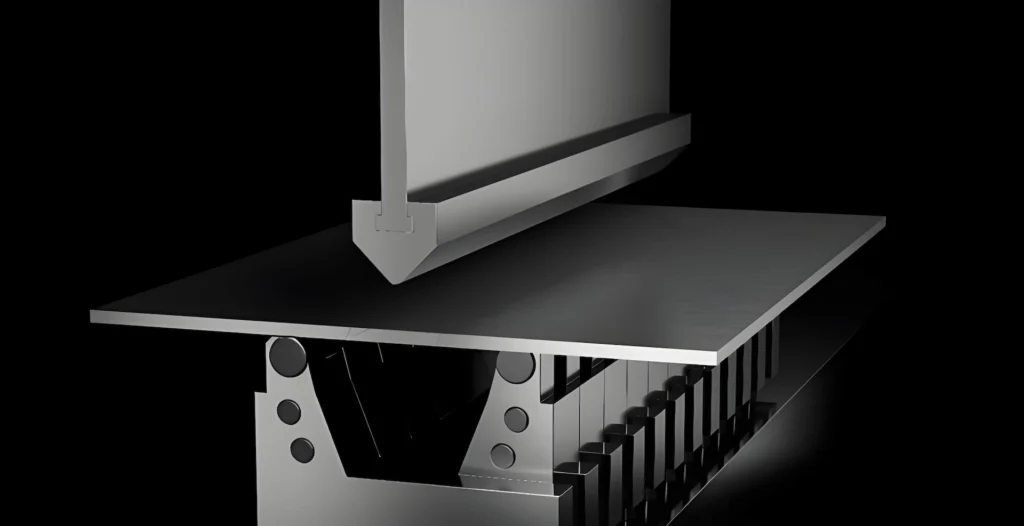
Adjustable Big V Die
Special tools mode
- Used for various complex metal processing tasks, overcoming challenges in traditional bending applications
- Bending accuracy can reach 30 degrees, depending on the synchronization capability of the machine
- Compared to traditional models, reduces bending pressure by 10%
- Overcomes issues of material deformation, reducing model replacement time by 30% or more
- Compared to traditional models, consume less energy in operation, making them more user-friendly
- Can be conveniently transported and added to workpieces (models), supporting customer-added integrated operations
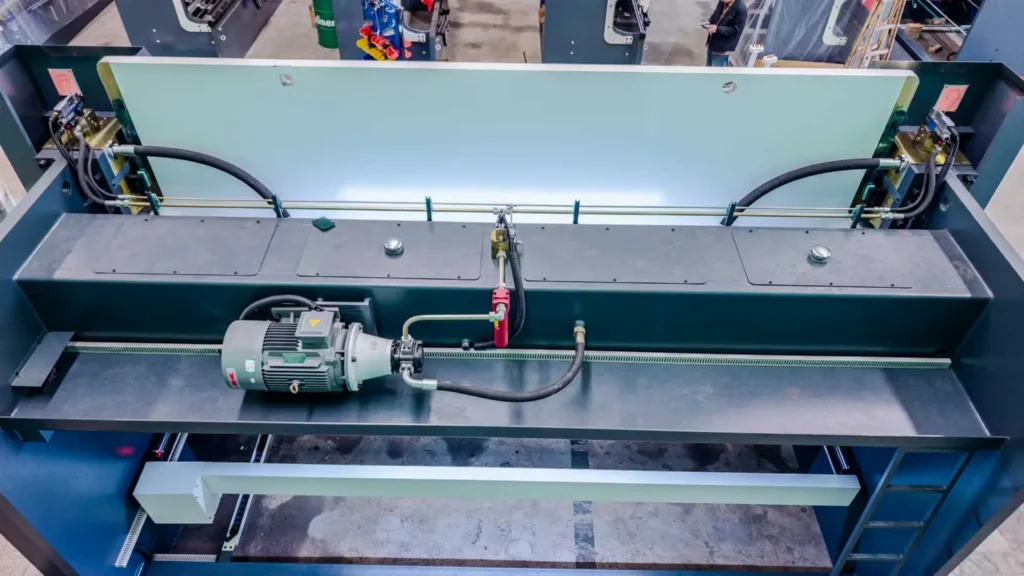
CAMT Itergral Hydraulic System
Advanced Hybrid Servo ECO Technology
Special tools mode
- Ensures machine stability and rigidity with strict inspections and finite element analysis.
- Delivers real-time feedback and micron-level precision.
- Boosts efficiency with 20% faster response than hydraulic systems.
- Eco-friendly design with regenerative power recovery.
- Advanced technology for superior performance.
- Automatic angle correction and collision prevention.
- Backed by professional engineers for lifelong assurance.