






How to Diagnose and Repair Press Brake Cylinder Failures
Impact: Reduces synchronization errors to <0.1mm. Mechanical Component Inspection. Guide Rail and Ram Check.
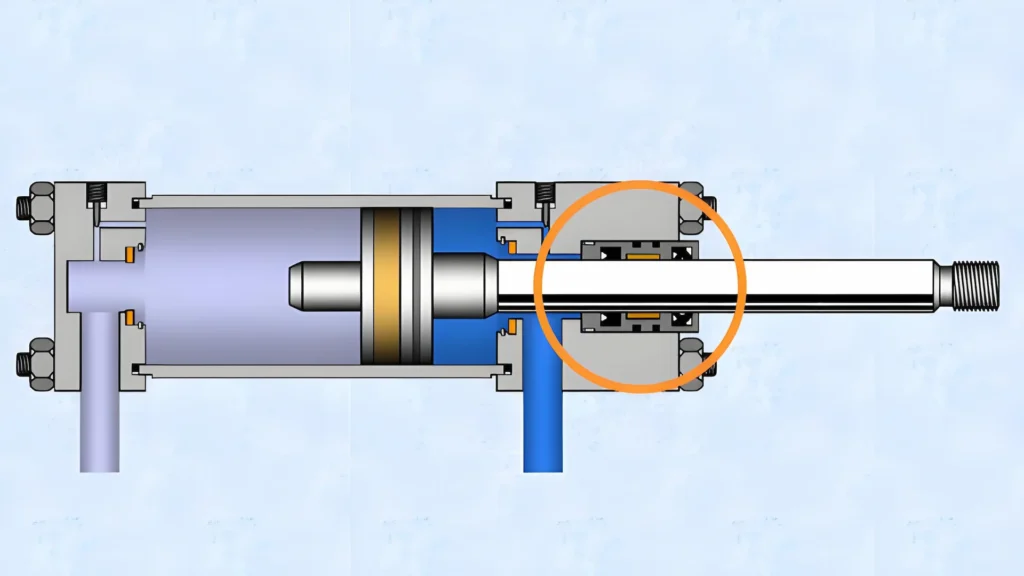
Clean rails with degreasers and inspect for wear or scratches.
Adjust rail-ram clearance to 0.05-0.1mm for smooth motion.
Cost: $100-$500 for rail repairs.
Load Balance Verification.
Ensure molds are level using a laser alignment tool.
Position workpieces symmetrically to prevent single-sided loading.
Electrical Control Calibration
Sensor Signal Check.
Clean position sensor heads and recalibrate zero points.
Use shielded cables to eliminate signal interference.
Controller Parameter Tuning
Optimize PID settings (e.g., proportional gain: 0.8-1.2, integral time: 0.1-0.2s). | Implement master-slave or cross-feedback algorithms for real-time synchronization. | System Testing and Validation |
Manual Mode Testing | Drive each cylinder individually, monitoring pressure with a gauge (±1 bar tolerance). | Adjust valves to equalize pressures. |
Automatic Mode Calibration | Run self-learning cycles to set synchronization baselines. | Use diagnostic software to monitor displacement curves, targeting <0.1mm error. |
Preventive Maintenance Schedule | Task. | Frequency. |
Cost Estimate | Impact. | Replace hydraulic oil and filters. |
Every 6 months.
Reduces contamination by 80%
Inspect servo valve response.
Quarterly
Prevents 90% of valve-related failures
Lubricate mechanical components
Monthly.
Extends component life by 30%
Log and analyze fault data.
$0 (in-house)
Predicts 70% of potential failures.
FAQ: Press Brake Cylinder Failure Diagnosis and Solutions
Q: What are the main causes.
of press brake cylinder failure?
A: Valve core sticking, blockages, low control pressure, air in the system, or high fluid viscosity in cold conditions.
Q: How do I fix a stuck valve core or blocked valve hole?
A: Check fluid for contamination, clean or replace the valve core, and inspect valve body wear. Q: Why does the cylinder not move or move slowly?.
A: Inspect for tight seals, contamination, or misalignment. Replace worn seals and ensure proper cylinder alignment. Q: How can I address low hydraulic pressure?.
A: Adjust throttling resistance, verify valve settings, and check pressure source for interference. Q: How do I prevent air in the hydraulic system?.
A: Monitor fluid levels, inspect pump suction seals, and clean/replace coarse filters. Q: Why is cylinder performance poor in cold conditions?.
A: High fluid viscosity reduces flow. Use low-viscosity hydraulic oil or preheat the system with a heater.
A: Check fluid for contamination, clean or replace the valve core, and inspect valve body wear. A: Follow a quarterly maintenance schedule, including fluid checks, seal inspections, and valve calibrations.
A: Inspect for tight seals, contamination, or misalignment. Replace worn seals and ensure proper cylinder alignment. Press brake cylinder maintenance is a cornerstone of reliable sheet metal fabrication. By addressing failure causes like contamination, air bubbles, and seal issues, and implementing systematic synchronization solutions, operators can achieve near-perfect bending accuracy and efficiency. Regular maintenance, supported by data-driven schedules and professional services like CAMT, can extend equipment lifespan by 3-7 years and reduce downtime costs by up to 40%. Invest in high-quality components and proactive care to keep your hydraulic or CNC press brake performing at its best.
Jane Smith Metalworking specialist with 12 years of experience in sheet metal fabrication and press brake applications, certified by ASME.
All Products
A: Check fluid for contamination, clean or replace the valve core, and inspect valve body wear. Punchine Machine.
Related News How to Properly Install a Press Brake Machine.
Press Brake Safety Precautions: Complete Guide for Safe Operation and Maintenance blog.
press brake cylinder
A: Check fluid for contamination, clean or replace the valve core, and inspect valve body wear. press brake safety.
A: Inspect for tight seals, contamination, or misalignment. Replace worn seals and ensure proper cylinder alignment. Q: How do I prevent air in the hydraulic system?.
A: Monitor fluid levels, inspect pump suction seals, and clean/replace coarse filters. Q: Why is cylinder performance poor in cold conditions?.
A: High fluid viscosity reduces flow. Use low-viscosity hydraulic oil or preheat the system with a heater.
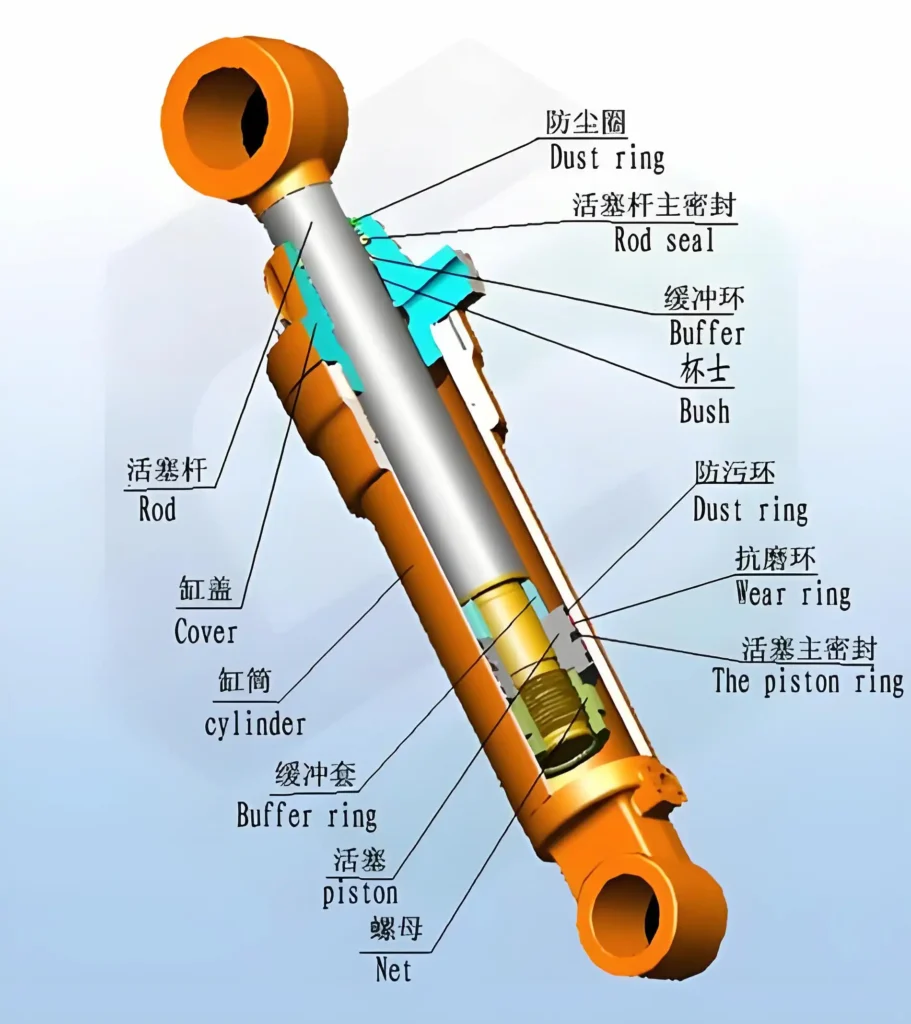
Q: How often should I maintain my press brake cylinder?
A: Follow a quarterly maintenance schedule, including fluid checks, seal inspections, and valve calibrations.
Press brake cylinder maintenance is a cornerstone of reliable sheet metal fabrication. By addressing failure causes like contamination, air bubbles, and seal issues, and implementing systematic synchronization solutions, operators can achieve near-perfect bending accuracy and efficiency. Regular maintenance, supported by data-driven schedules and professional services like CAMT, can extend equipment lifespan by 3-7 years and reduce downtime costs by up to 40%. Invest in high-quality components and proactive care to keep your hydraulic or CNC press brake performing at its best.
Read more about Principle and Function of Press Brake Safety Protection System
Read more about Press Brake Maintenance and Repair.
Read more about Practical Methods for Press Brake Accuracy with Long Term Precision.
Read more about Practical Guidance For Press Brake Operation.
Read more about How to Properly Install a Press Brake Machine
press brake cylinder.
ゼロ点とゲイン設定をデジタルコントローラーで校正します。.
例:2025年の修理事例では、サーボバルブを再校正することで0.5mmの同期ずれを修正しました。.
シリンダーの漏れ検出
5分間の圧力保持テストを実施します(例:200 barで)。.
圧力が5%以上低下した場合は、シールまたはシリンダーを交換します。.
UV色素トレーシングで配管の外部漏れを検査します。.
圧力と流量のバランス
ポンプの出力安定性(±2 bar)を確認します。.
流量分配バルブを調整するか、圧力補償器を取り付けてオイル供給のバランスを取ります。.
効果:同期誤差を0.1mm未満に削減します。.
機械部品の検査
ガイドレールとラムの点検
レールを脱脂剤で清掃し、摩耗や傷がないか検査します。.
スムーズな動作のために、レールとラムのクリアランスを0.05-0.1mmに調整します。.
費用:レール修理に100ドル~500ドル。.
負荷バランスの検証
Ensure molds are level using a laser alignment tool.
Position workpieces symmetrically to prevent single-sided loading.
Electrical Control Calibration
Sensor Signal Check
Clean position sensor heads and recalibrate zero points.
Use shielded cables to eliminate signal interference.
Controller Parameter Tuning
Optimize PID settings (e.g., proportional gain: 0.8-1.2, integral time: 0.1-0.2s).
Implement master-slave or cross-feedback algorithms for real-time synchronization.
System Testing and Validation
Manual Mode Testing
Drive each cylinder individually, monitoring pressure with a gauge (±1 bar tolerance).
Adjust valves to equalize pressures.
Automatic Mode Calibration
Run self-learning cycles to set synchronization baselines.
Use diagnostic software to monitor displacement curves, targeting <0.1mm error.
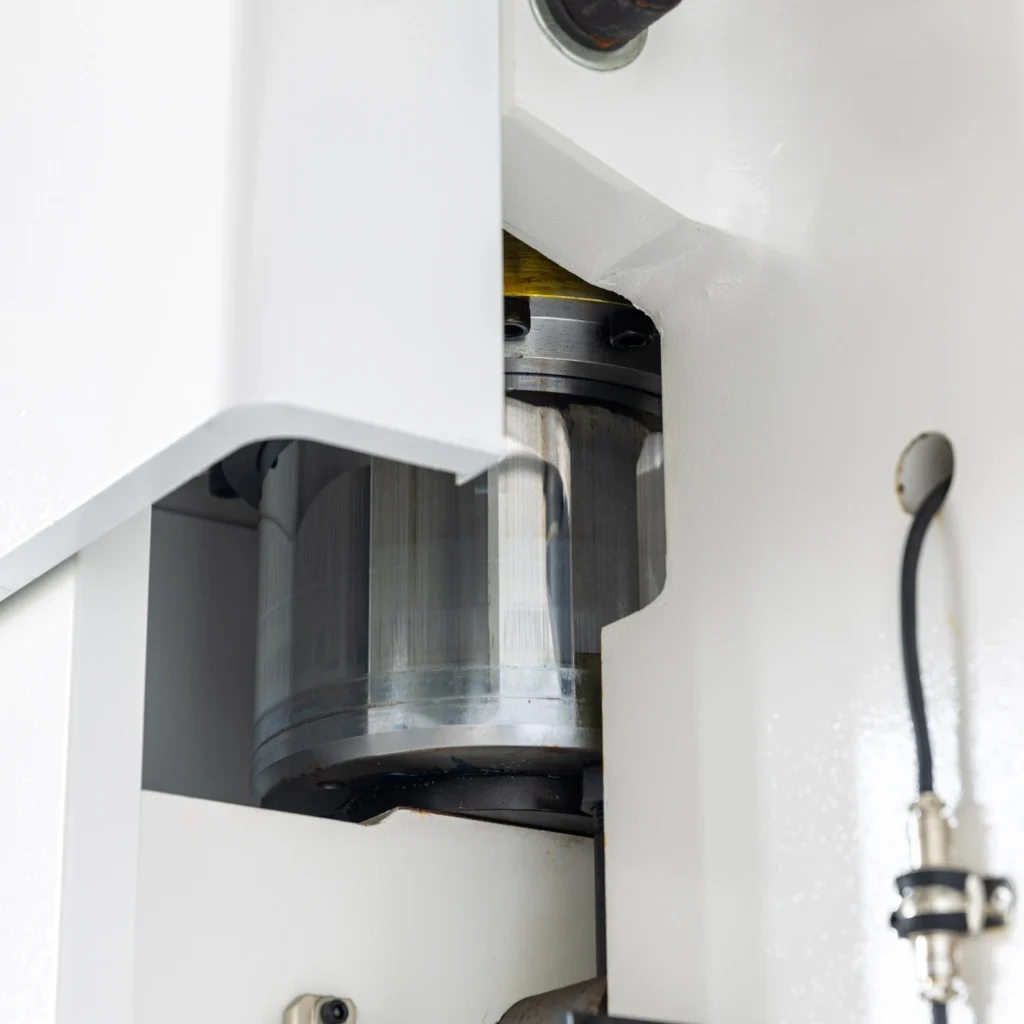
Preventive Maintenance Schedule
Task | Frequency | Cost Estimate | Impact |
Replace hydraulic oil and filters | Every 6 months | $200-$500 | Reduces contamination by 80% |
Inspect servo valve response | Quarterly | $100-$300 | Prevents 90% of valve-related failures |
Lubricate mechanical components | Monthly | $50-$150 | Extends component life by 30% |
Log and analyze fault data | Monthly | $0 (in-house) | Predicts 70% of potential failures |
FAQ: Press Brake Cylinder Failure Diagnosis and Solutions
Q: What are the main causes of press brake cylinder failure?
A: Valve core sticking, blockages, low control pressure, air in the system, or high fluid viscosity in cold conditions.
Q: How do I fix a stuck valve core or blocked valve hole?
A: Check fluid for contamination, clean or replace the valve core, and inspect valve body wear.
Q: Why does the cylinder not move or move slowly?
A: Inspect for tight seals, contamination, or misalignment. Replace worn seals and ensure proper cylinder alignment.
Q: How can I address low hydraulic pressure?
A: Adjust throttling resistance, verify valve settings, and check pressure source for interference.
Q: How do I prevent air in the hydraulic system?
A: Monitor fluid levels, inspect pump suction seals, and clean/replace coarse filters.
Q: Why is cylinder performance poor in cold conditions?
A: High fluid viscosity reduces flow. Use low-viscosity hydraulic oil or preheat the system with a heater.
Q: How often should I maintain my press brake cylinder?
A: Follow a quarterly maintenance schedule, including fluid checks, seal inspections, and valve calibrations.
Press brake maintenance and repair should be viewed as an ongoing process rather than a reaction to failure. Proper lubrication, careful hydraulic system management, and regular mechanical inspection form the foundation of reliable machine operation. These practices not only reduce downtime but also help maintain consistent bending accuracy over the machine’s service life.
Press brake cylinder maintenance is a cornerstone of reliable sheet metal fabrication. By addressing failure causes like contamination, air bubbles, and seal issues, and implementing systematic synchronization solutions, operators can achieve near-perfect bending accuracy and efficiency. Regular maintenance, supported by data-driven schedules and professional services like CAMT, can extend equipment lifespan by 3-7 years and reduce downtime costs by up to 40%. Invest in high-quality components and proactive care to keep your hydraulic or CNC press brake performing at its best.

V-Grooving Machine
- Press Brake
- Laser Cutting Machine
- Shearing Machine
- Press Brake Safety Precautions: Complete Guide for Safe Operation and Maintenance
- Hydraulic Press Machine
- Read more about Practical Methods for Press Brake Accuracy with Long Term Precision
- Rolling Machine
- Ironworker
- Press Brake Tooling
- Machinery Accessories