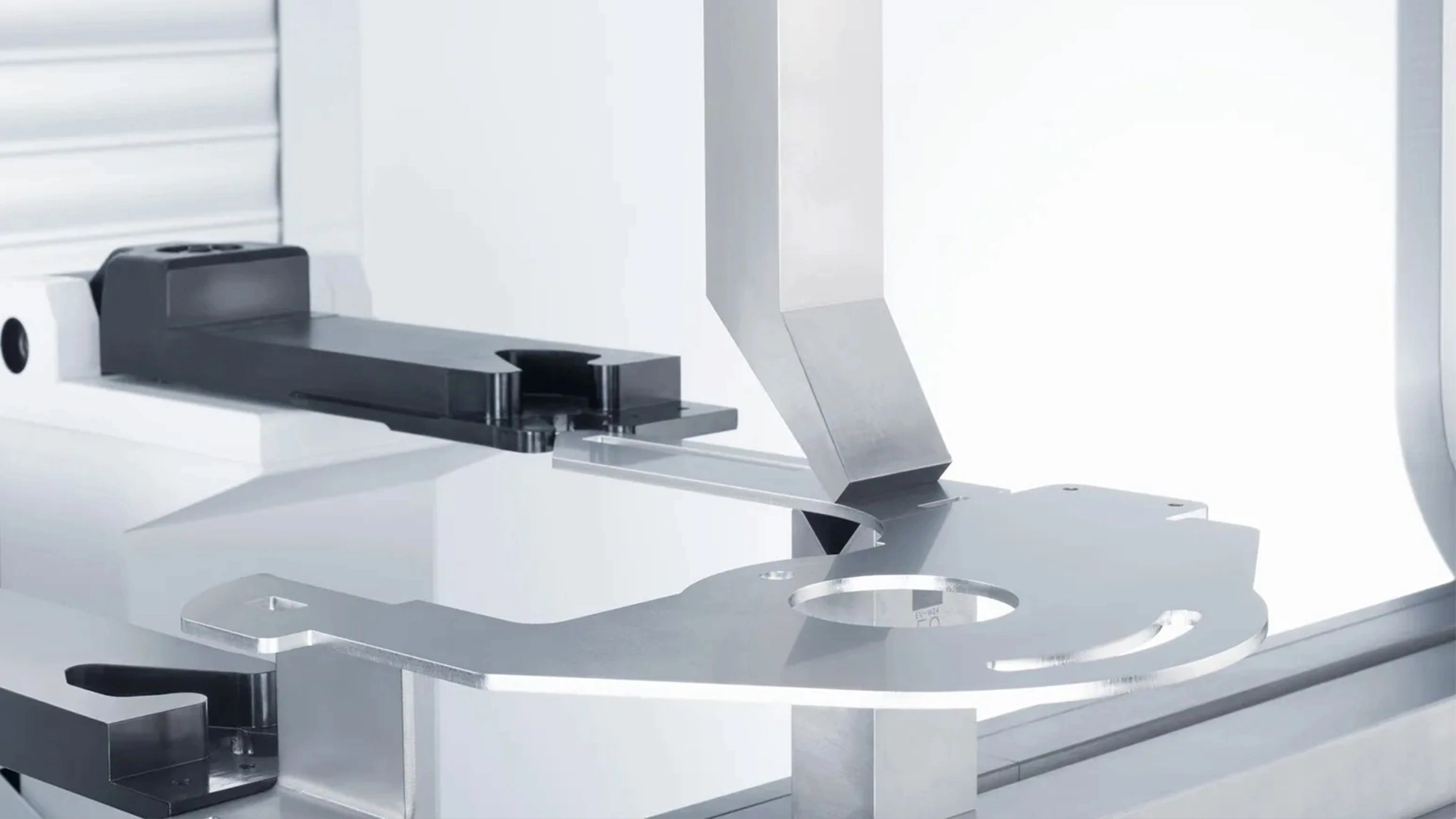







Diffference Between NC Press Brake and CNC Press Brake
NC press brake and each leveraging distinct technologies to meet diverse manufacturing needs. This comprehensive guide compares their working principles, performance metrics, application scenarios, and addresses common user questions, drawing on recent industry insights and literature to help you select the optimal machine for your operations. CNC press brake The core difference between torsion bar NC press brakes and electro-hydraulic synchronous CNC press brakes lies in their synchronization mechanisms, which directly impact precision and operational flexibility.

Torsion Bar NC Press Brake
Core Structure: Employs a mechanical torsion bar to link the left and right hydraulic cylinders, ensuring synchronized slider movement via a rigid shaft, swing arms, and connecting rods. The torsion bar forces both cylinders to move in unison, relying on the mechanical integrity of the bar for synchronization.
Control Method: Operates with an open-loop hydraulic system, where precision depends on the torsion bar’s rigidity and mechanical alignment. The NC controller (e.g., ESTUN E21 or Cybelec CybTouch 8) typically manages two or three axes (Y, X, and optionally R), but lacks real-time error correction.
Design Characteristics: Features a simple, robust structure with fewer electronic components, making it cost-effective and easier to maintain. The torsion bar’s design ensures high rigidity but cannot automatically adjust for parallelism errors.
Electro-Hydraulic Synchronous CNC Press Brake.
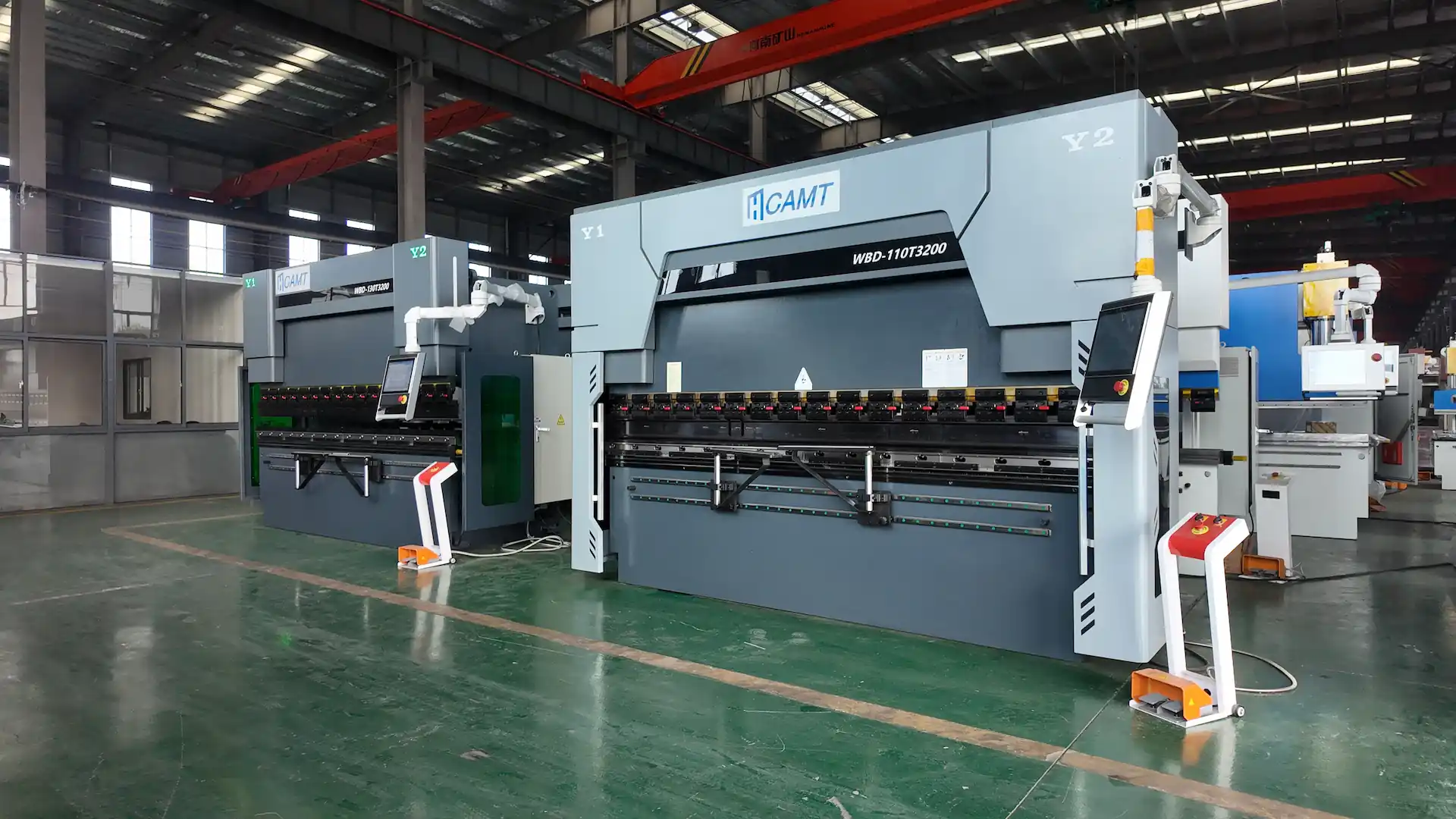
Core Structure: Replaces the mechanical torsion bar with a closed-loop control system comprising electro-hydraulic servo valves, grating rulers or linear encoders, and a CNC controller (e.g., Delem DA53T, DA66T). These components monitor and adjust cylinder positions in real-time, ensuring precise synchronization.
Control Method: Utilizes electronic feedback to dynamically correct errors, achieving high-precision synchronization. The CNC system analyzes slider positions via grating rulers and adjusts through proportional servo valves, forming a closed-loop feedback system.
Design Characteristics: Incorporates advanced electronics and hydraulics, enabling multi-axis control (Y1, Y2, X, R, and optional Z or V-axis compensation) and adaptability to complex bending tasks.
Summary: Torsion bar NC press brakes rely on mechanical synchronization, offering simplicity but limited adaptability. Electro-hydraulic press brakes use electronic closed-loop control for dynamic adjustments, providing superior precision and flexibility but at a higher complexity and cost.
Performance Differences: Precision, Speed, and Cost Analysis.
Performance metrics are critical for assessing the suitability of each press brake type for specific applications.
Processing Precision
Torsion Bar NC Press Brake:.
Precision Range: Typically achieves ±0.1mm to ±0.2mm, influenced by torsion bar wear and mechanical tolerances. Some advanced models claim ±0.01mm accuracy, exceeding standard expectations for NC systems.
Limitations: Susceptible to synchronization issues during long-stroke or eccentric load bending due to potential torsion bar deformation. Requires periodic calibration to maintain accuracy.
Challenges: Lacks real-time error feedback, leading to potential angle inconsistencies, especially under partial loads.
Electro-Hydraulic Synchronous CNC Press Brake:.
Precision Range: Achieves ±0.02mm to ±0.05mm, with some models reaching ±0.01mm or better, thanks to closed-loop compensation.
Advantages: Adapts to material springback and maintains consistent angles across complex, multi-stage bends. The system’s real-time feedback ensures high repeatability and stability.
Industry Insight: Recent studies highlight that electro-hydraulic systems maintain precision over extended use, making them ideal for high-tolerance applications like aerospace components.
Operational Efficiency.
Torsion Bar Press Brake Machine:.
Speed: Uses 6:1 or 8:1 hydraulic cylinders, resulting in slower response times, with approximately 8-12 cycles per minute. Descent speed is limited to around 80-100 mm/s, and backgauge movement reaches 100 mm/s. Speed transitions are less smooth, impacting efficiency.
Constraints: Fixed slider opening height requires full travel from top to bottom, reducing efficiency for smaller workpieces.
Electro-Hydraulic Press Brake Machine:.
Speed: Employs 13:1 or 15:1 cylinders, achieving 15-20 cycles per minute. Descent and return speeds reach up to 200 mm/s, with backgauge speeds up to 400 mm/s. Smooth speed transitions enhance productivity.
Advantages: Adjustable slider stroke via CNC control eliminates unnecessary travel, saving time. The system’s servo-driven hydraulics enable faster cycle times, improving throughput by 30-50%.
Literature Note: Recent analyses indicate that electro-hydraulic press brakes can double or triple the output of torsion bar machines in high-speed production environments.
Maintenance and Operational Costs.
Maintenance: Simple mechanical design reduces routine maintenance costs. However, torsion bar wear or deformation requires costly replacements.
Initial Cost: Typically 60%-70% of the cost of an electro-hydraulic machine, making it attractive for budget-conscious buyers. For capacities below 200 tons, NC machines are significantly cheaper.
Constraints: Fixed slider opening height requires full travel from top to bottom, reducing efficiency for smaller workpieces.
Maintenance: Complex servo systems and electronics increase maintenance complexity, but lower failure rates and advanced diagnostics improve long-term reliability.
Initial Cost: Higher upfront cost, often 2x that of NC machines for capacities below 200 tons, though the price gap narrows for larger models (>200 tons).
Energy Consumption: Servo motors reduce standby power by up to 50% and overall energy use by 20%-30%, offering significant savings over time.
Advantages: Adjustable slider stroke via CNC control eliminates unnecessary travel, saving time. The system’s servo-driven hydraulics enable faster cycle times, improving throughput by 30-50%.
Summary: Torsion bar NC press brakes offer cost-effective solutions with lower initial investment but compromise on precision and speed. Electro-hydraulic machines provide superior performance and energy efficiency, justifying their higher cost for precision-driven applications.
Application Scenarios: Choosing the Optimal Solution.
The choice between torsion bar and electro-hydraulic press brakes depends on production requirements, workpiece complexity, and budget constraints.
When to Choose a Torsion Bar NC Press Brake.
Budget-Constrained SMEs: Ideal for small to medium enterprises due to lower initial costs (60%-70% of electro-hydraulic models). Suitable for startups or operations with limited capital.
Simple Batch Production: Best for applications requiring moderate precision (≤±0.15mm), such as:
Construction Industry: Manufacturing metal components like beams, columns, or shelving.
General Fabrication: Producing brackets, frames, or enclosures with straightforward geometries.
Low-Complexity Workpieces: Effective for small to medium-sized parts with minimal multi-stage bending requirements.
Literature Insight: Torsion bar press brakes are recommended for industries prioritizing cost over precision, such as steel structure manufacturing or rough processing plants.
When to Choose an Electro-Hydraulic Synchronous CNC Press Brake.
High-Precision Industries: Essential for applications demanding tight tolerances, including:.
Automotive: Producing precise components like chassis parts or brackets.
Aerospace: Crafting complex sheet metal parts with tolerances as low as ±0.01mm.
Electronics: Manufacturing enclosures or components requiring consistent angles.
Complex Processing Needs: Excels in multi-angle bending, irregular part forming, and variable material thicknesses due to its adaptive control and V-axis compensation.
High-Volume Production: Suited for operations requiring high throughput and minimal downtime, leveraging faster cycle times and automation features.
Industry Trend: Recent literature emphasizes electro-hydraulic press brakes for industries adopting Industry 4.0 practices, as their CNC systems support integration with robotic arms and automated workflows.
Summary: Torsion bar NC press brakes are cost-effective for simpler, low-precision tasks, while electro-hydraulic machines are the preferred choice for high-precision, complex, or high-volume production.
Common User Questions (FAQ).
Q1: Is an Electro-Hydraulic CNC Press Brake Worth the Higher Investment?.
Answer: For high-value products (e.g., aerospace or automotive parts) or stable, high-volume orders, electro-hydraulic press brakes offer rapid ROI through:.
Reduced Scrap Rates: Higher precision minimizes material waste.
Increased Efficiency: Faster cycle times and automation reduce labor costs and production time.
Long-Term Savings: Lower energy consumption and maintenance costs offset the initial investment over 5-7 years.
Q2: Can a Torsion Bar Machine Be Upgraded to Electro-Hydraulic?
Answer: Upgrading is technically feasible but involves significant modifications, including replacing the hydraulic system with servo valves, adding grating rulers, and installing a CNC controller. The cost is approximately 40% of a new electro-hydraulic machine, making it less economical unless the existing machine is in excellent condition. A cost-benefit analysis is essential.
Q3: How Do Their Energy Consumption Levels Compare?.
Answer: Electro-hydraulic press brakes use servo motors, reducing standby power consumption by 50% and overall energy use by 20%-30% compared to torsion bar machines, which rely on continuously running hydraulic pumps. This makes electro-hydraulic models more environmentally friendly and cost-efficient over time.
Q4: What Are the Limitations of Torsion Bar Machines for Large Workpieces?
Answer: Torsion bar machines struggle with large workpieces (>400 tons) due to:.
Deformation Risk: Prolonged eccentric loading can deform the torsion bar, reducing accuracy.
Limited Stroke Flexibility: Fixed stroke heights increase cycle times for large or complex bends.
Recommendation: Industry experts advise against torsion bar machines for capacities above 400 tons, favoring electro-hydraulic models for heavy-duty applications.
Q5: How Do Control Systems Impact Operator Experience?
Answer:Torsion Bar NC Press Brake: Uses simpler NC controllers (e.g., ESTUN E21, DA41S) with limited programming capabilities, often requiring experienced operators for manual adjustments and trial bends, increasing setup time and potential waste.
Electro-Hydraulic CNC Press Brake: Advanced CNC systems (e.g., Delem DA66T) offer intuitive interfaces, modular programming, and simulation features, reducing operator training time and enabling less experienced workers to achieve high-quality results.
Recent Industry Insights and Trends.
Technological Advancements: Electro-hydraulic CNC press brakes are increasingly integrated with Industry 4.0 technologies, such as robotic arms, laser angle measurement systems, and servo pump units, enhancing automation and precision. These features are less compatible with torsion bar systems due to their mechanical limitations.
Energy Efficiency Focus: Recent studies emphasize the energy-saving potential of electro-hydraulic systems, with hybrid models (combining electric and hydraulic drives) gaining traction for up to 30% energy savings over traditional hydraulic systems.
Market Trends: The demand for electro-hydraulic press brakes is growing in precision-driven industries like aerospace and automotive, while torsion bar machines remain popular in cost-sensitive markets like construction and general fabrication.
Literature Review: Industry reports from sources highlight that electro-hydraulic press brakes are favored for their closed-loop control and adaptability, while torsion bar machines are valued for their simplicity and affordability in less demanding applications.
Choosing between a torsion bar NC press brake and an electro-hydraulic synchronous CNC press brake hinges on your production needs, precision requirements, and budget. Torsion bar NC press brakes are ideal for cost-conscious SMEs and simpler applications, such as construction components or shelving, offering affordability and ease of maintenance. Electro-hydraulic synchronous press brakes excel in high-precision, complex, or high-volume tasks, such as automotive and aerospace manufacturing, with superior accuracy, speed, and energy efficiency. By aligning your choice with specific production goals and leveraging insights from recent industry literature, you can optimize performance and cost-effectiveness.
Read more about Principle and Function of Press Brake Safety Protection System.
Read more about Press Brake Maintenance and Repair.
Read more about Practical Methods for Press Brake Accuracy with Long Term Precision.
Conclusion
Read more about How to Properly Install a Press Brake Machine.

Metalworking specialist with 12 years of experience in sheet metal fabrication and press brake applications, certified by ASME.