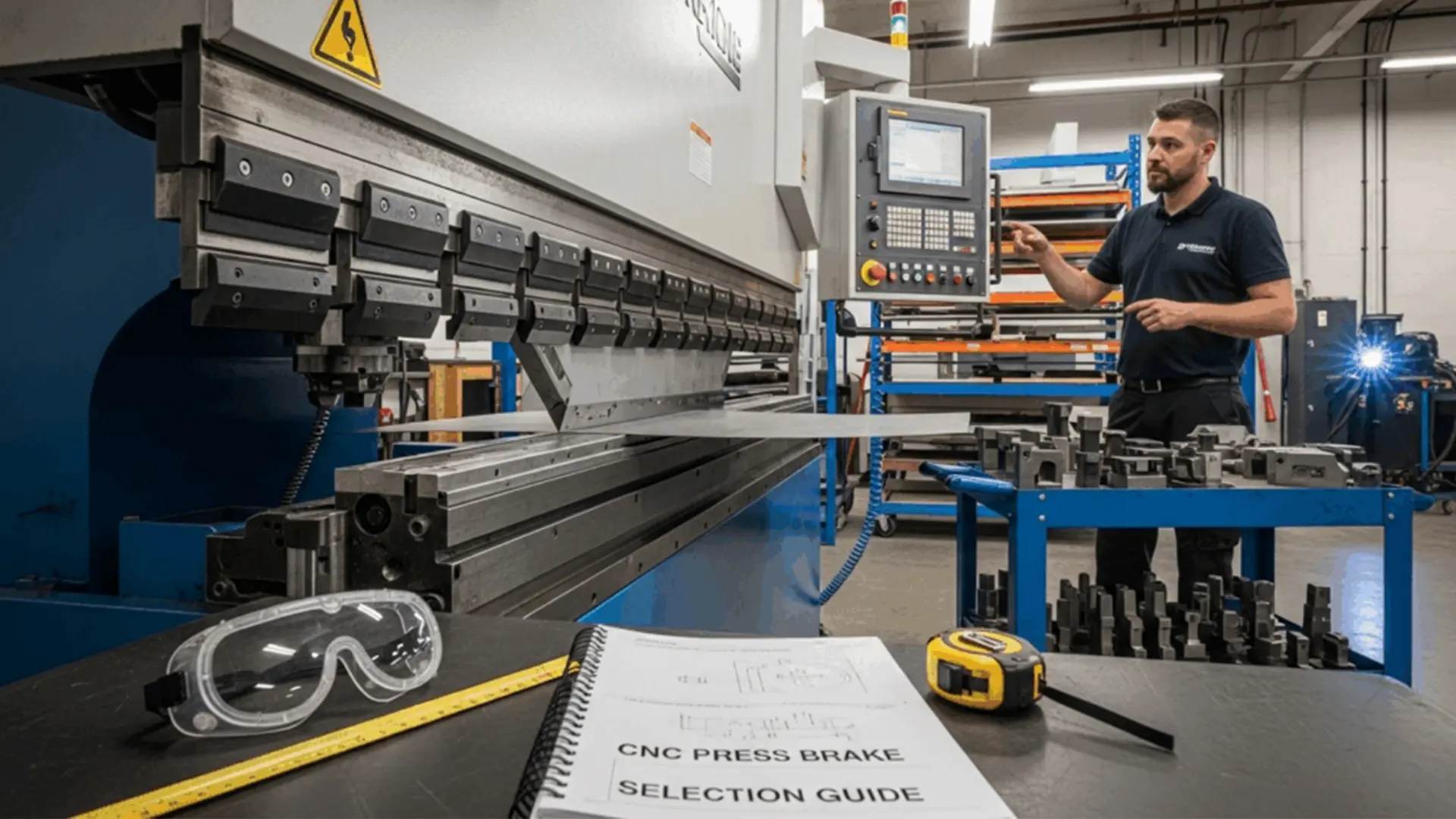







Wie wählt man die richtige Abkantpresse für seine Werkstatt?
Choosing the right press brake is one of the most important decisions for any metal fabrication workshop. It directly affects daily productivity, part quality, operator safety, and long-term profitability. In 2026, the industry has seen major advances in servo-electric and hybrid technologies that deliver up to 70% energy savings, faster cycle times, and unmatched precision. According to U.S. Department of Energy, energieeffiziente Industrieanlagen können die langfristigen Betriebskosten in Fertigungsumgebungen erheblich senken.
Egal, ob Sie eine kleine Werkstatt oder eine Großserienfertigung betreiben, dieser umfassende Leitfaden bietet einen vollständigen Schritt-für-Schritt-Rahmen, der Ihnen hilft, eine fundierte Kaufentscheidung zu treffen.
Diese Expertenressource behandelt die Formel zur Berechnung der Abkantpressen-Tonnage, Vergleiche zwischen hydraulischen, elektrischen und Hybrid-Systemen, Hinteranschlagsysteme, Automatisierungsoptionen, Werkzeugauswahl, Gesamtbetriebskosten und die neuesten Sicherheitsstandards von 2026. Am Ende erhalten Sie klare, umsetzbare Empfehlungen, die auf Ihre spezifischen Bedürfnisse zugeschnitten sind.
Key Takeaways for 2026
- Use the updated tonnage formula and always add a 20% safety margin to protect your investment.
- Electric and hybrid servo-electric press brakes now offer 50-70% lower operating costs than traditional hydraulic models.
- Bed length and backgauge axes must match your most common workpiece dimensions and part complexity.
- Automation levels (semi or full robotic) deliver the fastest ROI when producing 50 or more identical parts per batch.
- Focus on total cost of ownership (TCO) rather than the sticker price – it can save you tens of thousands over five years.
Understanding Press Brakes and Their Role in Metal Fabrication in 2026
Abkantpressen sind das Rückgrat der Präzisionsblechbiegung in Branchen wie Bauwesen, Automobil, Luft- und Raumfahrt, HLK und kundenspezifischer Fertigung. Sie verwandeln flache Metallbleche mit hoher Genauigkeit und Wiederholbarkeit in komplexe dreidimensionale Teile.
Im Jahr 2026 hat sich die Technologielandschaft erheblich weiterentwickelt. Mechanische Pressen bleiben für sehr schnelle, einfache Großserienläufe relevant, aber die meisten modernen Werkstätten tendieren zu hydraulischen, elektrischen oder Hybridlösungen. Hydraulische Modelle dominieren immer noch, wenn extreme Tonnage für die Bearbeitung dicker Platten erforderlich ist. Elektrische und servoelektrische Pressen zeichnen sich durch Präzision, Geschwindigkeit und Energieeffizienz aus.
Industrieorganisationen wie Fabricators & Manufacturers Association highlight the growing adoption of servo-electric systems due to their efficiency and reduced maintenance requirements. Hybrid servo-electric systems combine the best of both worlds – full forming power with low energy consumption and fine control.
Main Types of Press Brakes Available in 2026
- Mechanical Press Brakes: Fast cycle times and suitable for repetitive simple bends in legacy operations.
- Hydraulic Press Brakes: Highest tonnage capacity (up to 1000+ tons) and ideal for heavy materials like thick plate or high-strength alloys.
- Electric / Servo-Electric Press Brakes: Excellent precision (±0.001″ repeatability), rapid setup, and 50-70% energy savings compared to hydraulic.
- Hybrid Servo-Electric Press Brakes: Balance of high power and efficiency – the most popular choice for most workshops in 2026.
Not sure which technology best fits your shop? Erhalten Sie eine personalisierte Abkantpressen-Empfehlung in 60 Sekunden.
Für einen tieferen Einblick in die Leistungsunterschiede zwischen hydraulischen und elektrischen Abkantpressen in der Praxis empfehlen wir die Lektüre von: Hydraulic vs Electric Press Brake: Key Differences Explained. This article provides a detailed breakdown of power sources, energy consumption, precision, maintenance, and ideal applications to help you determine which technology best suits your workshop needs.
Assessing Your Workshop’s Current and Future Production Needs
A successful press brake purchase starts with a thorough assessment of your current operations and projected growth over the next three to five years. Many workshops make the mistake of buying based only on today’s needs and quickly outgrow their machine.
Evaluating Production Volume Requirements
Begin by documenting your daily, weekly, and monthly output. Consider the number of shifts your workshop runs, the average size and complexity of parts produced, and any seasonal variations in demand.
Analyzing the Range of Materials You Process
Material type and thickness are critical factors. Mild steel, 304/316 stainless steel, aluminum, and high-strength alloys like AR400 each require different tonnage and tooling approaches. Standards referenced by American Welding Society provide guidelines for handling different material strengths and welding-related properties, which also influence bending performance.
Press Brake Tonnage Calculator 2026: Exact Formula + Real Examples
Correct tonnage calculation prevents machine overload, ensures part accuracy, and extends tool life. The standard 2026 formula is:
Tonnage = (Material thickness² × Material width × Material factor) ÷ Die opening
Always add a 20% safety margin to account for material variations, die wear, and unexpected production demands.
2026 Tonnage Reference Table
| Material Thickness (mm) | CNC press brakes with automated tool changers and robotic arms deliver ±0.05 mm precision, reducing human error by 80%. They are ideal for high-volume or complex parts. | Material Factor | Tonnage per Meter (approx.) | Recommended Safety Margin |
|---|---|---|---|---|
| 1 | Mild Steel | 0.8 | 30 | 20% |
| 2 | Mild Steel | 0.8 | 120 | 20% |
| 3 | 304 Stainless Steel | 1.4 | 250 | 20% |
| 6 | AR400 High-Strength Plate | 2.1 | 850 | 20-25% |
Real-World 2026 Examples:
- 1.5 mm 304 Stainless Steel, 2.5 m bend length, 30 mm V-die opening → Base tonnage ≈ 187.5 tons → With 20% safety margin = 225-ton press brake minimum.
- 4 mm Mild Steel, 3 m bend length, 50 mm V-die → Base tonnage ≈ 192 tons → With safety margin = 230-ton recommendation.
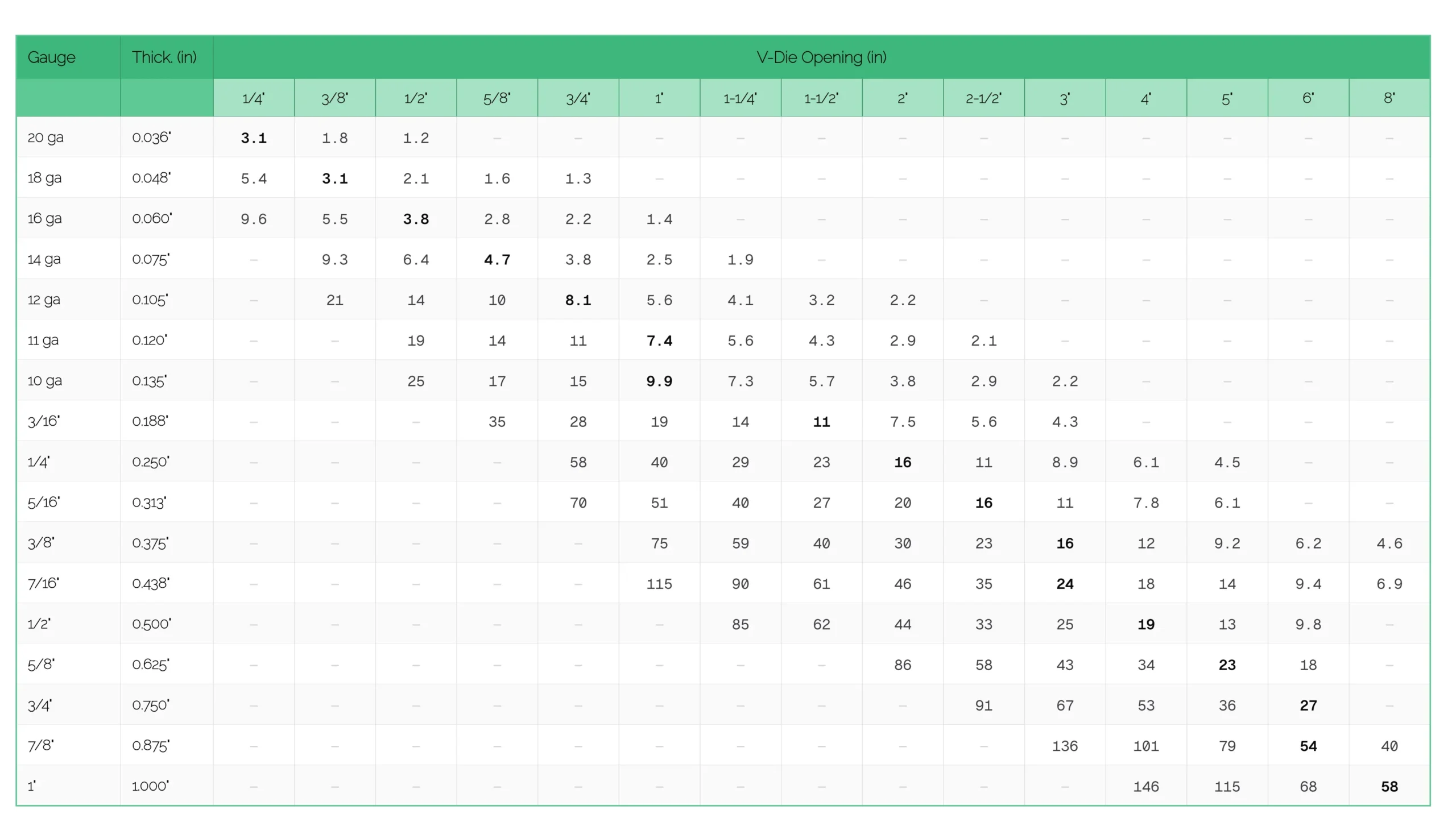
The tonnage formula and examples above give you a solid starting point. However, choosing the right machine tonnage in practice — such as deciding between a 100-ton and 160-ton press brake — also depends on production volume, material variations, and long-term efficiency. For practical guidance on this decision, check out: 100 Ton vs 160 Ton Press Brake: Which One Do You Need. It will help you apply the calculations to actual machine selection.
Free Resource: Use Our Online Press Brake Tonnage Calculator.
Determining the Optimal Press Brake Length for Your Work
Press brake bed length must accommodate your largest workpiece plus extra space for tooling setup and stage bending. Common lengths in 2026 include 8 ft (2.5 m), 10 ft (3 m), and 13 ft (4 m).
Hydraulic vs Electric vs Hybrid Press Brake 2026 Comparison
| Aspekt | Hydraulisch | Electric / Servo-Electric | Hybrid Servo-Electric |
|---|---|---|---|
| Power / Tonnage | Highest (up to 1000+ tons) | Medium to high | High power with fine control |
| Energy Consumption | High | 50-70% lower than hydraulic | 40-60% lower |
| Maintenance | Regular hydraulic fluid changes | Very minimal | Low |
| Speed & Repeatability | Good | Excellent (±0.001″) | Best overall |
Step-by-Step Press Brake Selection Process (2026)
- Document all bending requirements including materials, thicknesses, angles, and tolerances.
- Calculate minimum tonnage and bed length using the formula and examples above.
- Evaluate technology options (hydraulic, electric, or hybrid).
- Decide on the appropriate automation level for your production volume.
- Compare total cost of ownership against your available budget.
Understanding Backgauge Systems and Axis Configuration
The backgauge system positions the workpiece accurately for consistent bends.
- 2-Axis (X and R): Suitable for basic bends and lower budgets.
- 4-Axis or 6-Axis: Essential for complex shapes and higher productivity. Most 2026 shops benefit from at least 4 axes.
Selecting the Appropriate Automation Level for Your Operation
Automation can transform productivity but must match your workflow.
- Manual Operation: Ideal for prototypes and low volume.
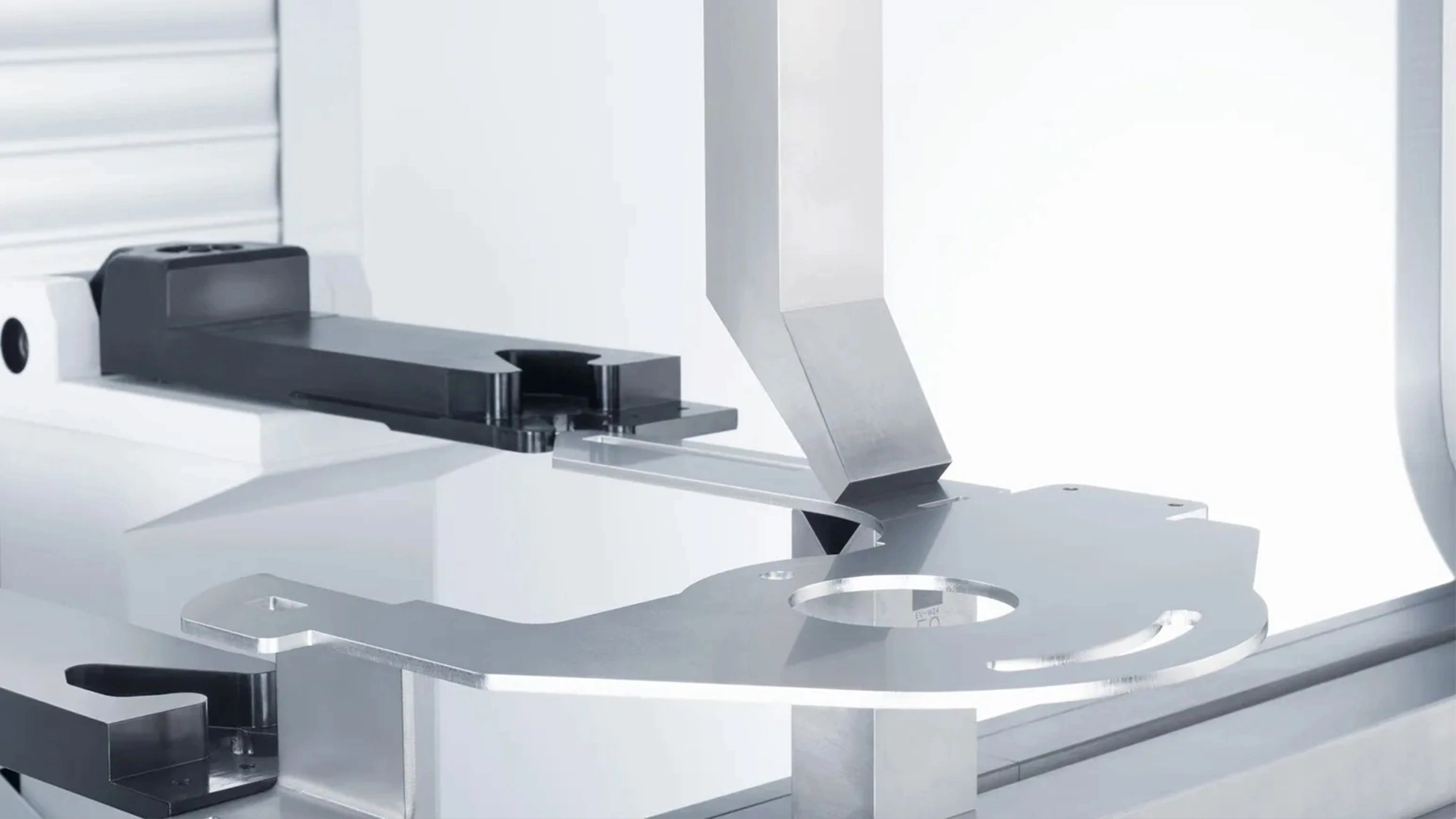
- Semi-Automated: Backgauges with automatic tool changers offer good balance.
- Fully Robotic Cells: Excellent when producing 50+ identical parts daily.
Tooling Compatibility, Availability, and Long-Term Costs
Popular Tooling Systems in 2026:
- American Style: Lower upfront cost but higher replacement frequency.
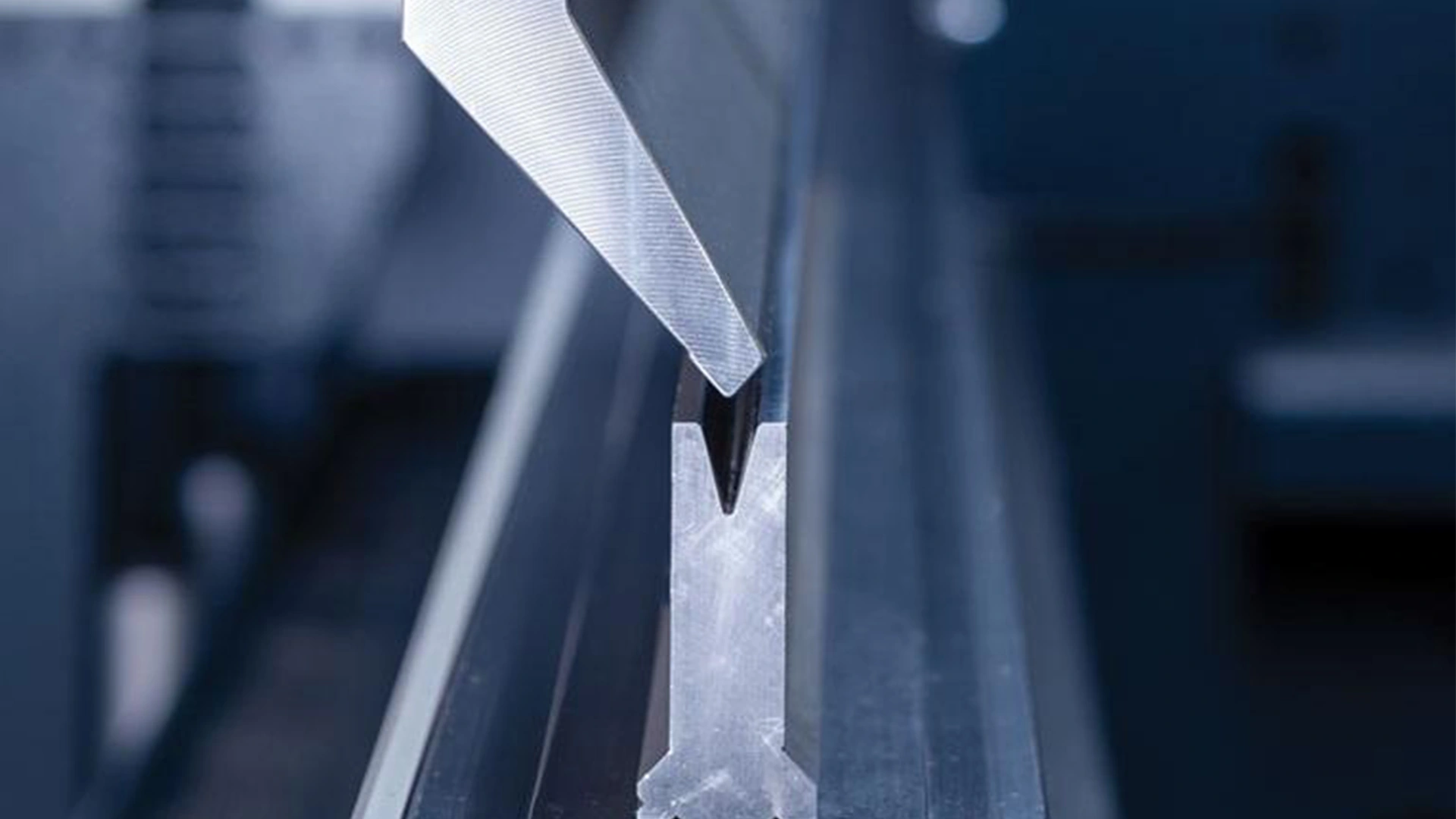
- European Style: Superior precision and durability.
- Wila Style: Excellent versatility and quick-change features.
Setting Your Budget Range and Understanding Total Cost of Ownership
| Precision machining in industrial production. | Entry-Level (50-100 tons) | Mid-Range (100-200 tons) | Heavy-Duty (200+ tons) |
|---|---|---|---|
| Typical Price (2026) | $22,000 – $55,000 | $55,000 – $160,000 | $160,000 – $550,000+ |
| 5-Year TCO Savings (Electric vs Hydraulic) | Up to $85,000 | ||
Evaluating Press Brake Manufacturers and Brand Reputation in 2026
Premium Options: Trumpf, Bystronic, Prima Power, LVD Strippit.
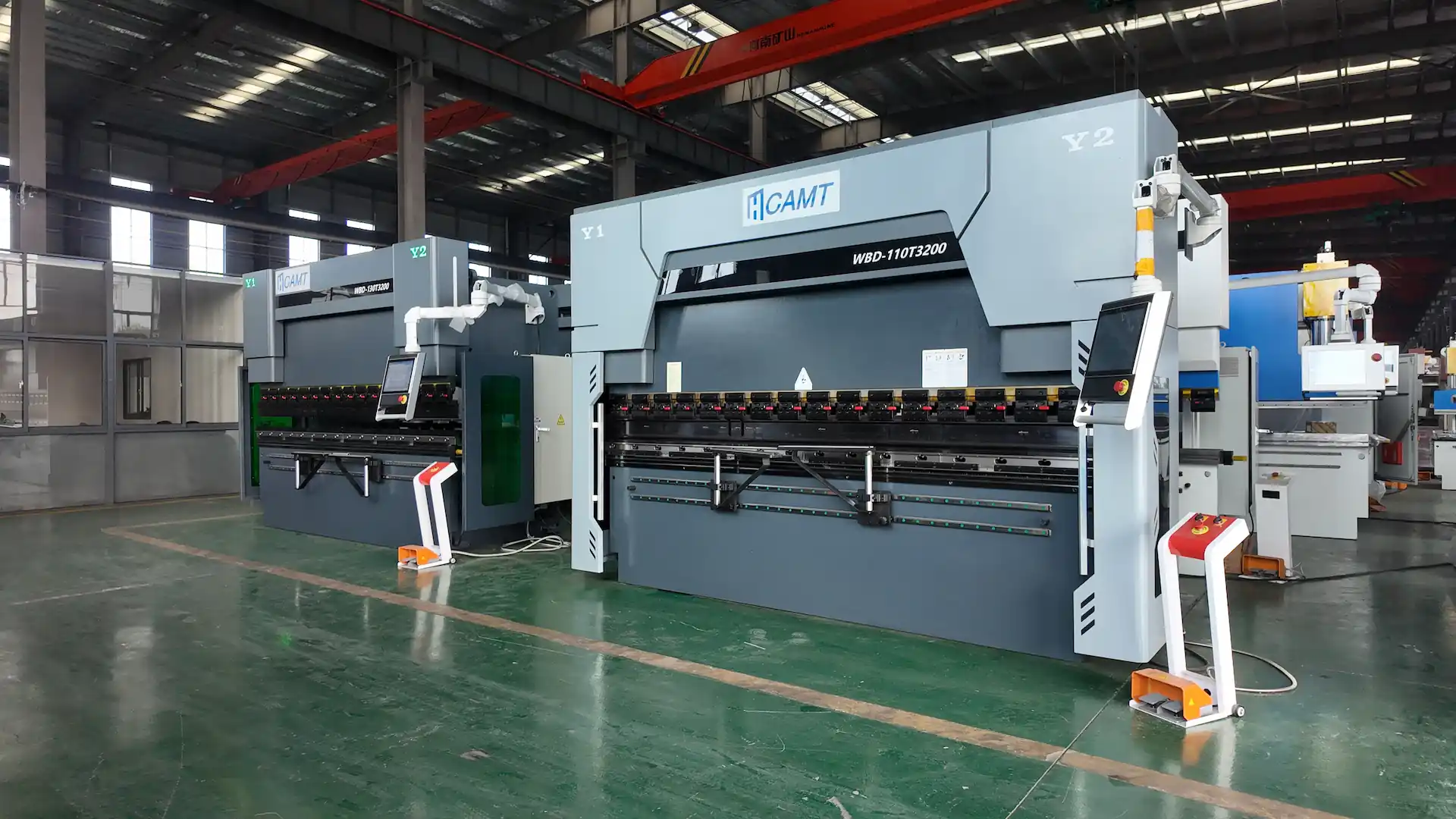
Best Value: CAMT.
Common Mistakes to Avoid When Selecting a Press Brake
- Underestimating required tonnage and adding insufficient safety margin.
- Choosing based solely on initial price instead of total cost of ownership.
- Ignoring future expansion and automation needs.
- Overlooking manufacturer service and parts availability.
FAQ – Press Brake Selection in 2026
How do we accurately determine the correct tonnage for our specific bending applications?
Use the formula Tonnage = (thickness² × width × material factor) ÷ die opening and add 20% safety margin.
Should we invest in hydraulic, electric, or hybrid press brake in 2026?
Electric and hybrid models are usually the best choice for most workshops due to significantly lower operating costs and higher precision.