







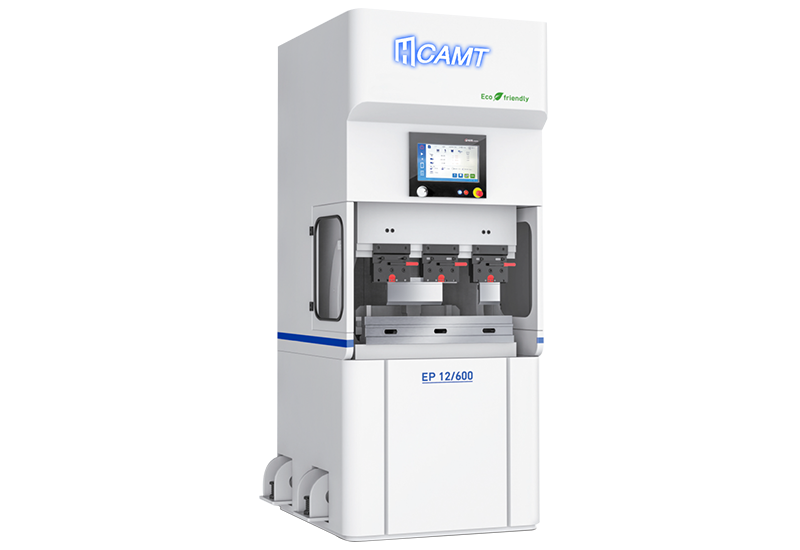
Efficiency Servo Electric Press Brake EPB Series

CAMT full servo electric press brake operates on a sophisticated principle where servo motors, controlled by an advanced CNC system, drive the ram’s movement to execute precise bending tasks, eliminating the need for hydraulic oil used in traditional machines. The CNC system processes programmed parameters such as bending angles and lengths, while real-time sensor feedback ensures exceptional accuracy down to ±0.005mm, making it ideal for intricate metalworking applications. Its advantages are numerous: it offers superior energy efficiency and environmental sustainability by avoiding hydraulic systems, thus reducing energy consumption and eliminating oil-related pollution. The machine also boasts high-speed performance with rapid response times, significantly shortening bending cycles and boosting overall productivity. Maintenance is minimal due to the absence of hydraulic components, which lowers operational costs and enhances equipment longevity. Furthermore, its flexible CNC programming enables seamless transitions between different workpiece specifications, catering to diverse production needs with ease, making it a versatile and cost-effective solution for modern manufacturing.
CAMT Full-Servo Electric Press Brake EPB Series
Stable&Durable.
Long Service Life Time
40X40
50X50
50X50
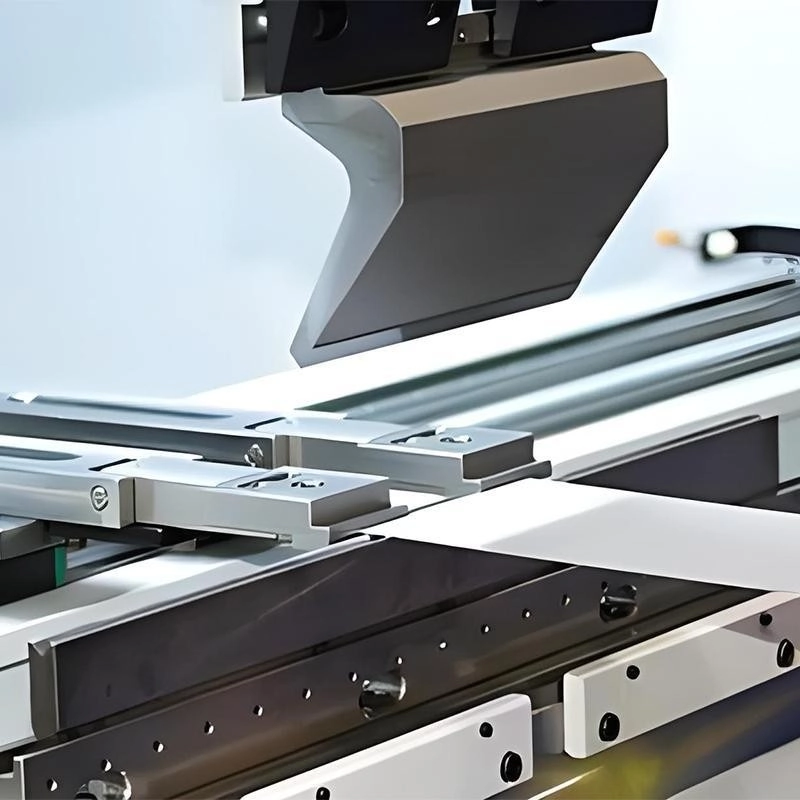
CHTR Rear BGA 600MM with 300MM/S
2 V Double CNC die series &835mm punches
VICHI Full Servo Motor&Drive
Imported Italy GIVI Maganetic Misure
Taiwan Precise HIWIN/TBI Ball Screw & LinearGuide
- Safety France Schneider Electric System Components
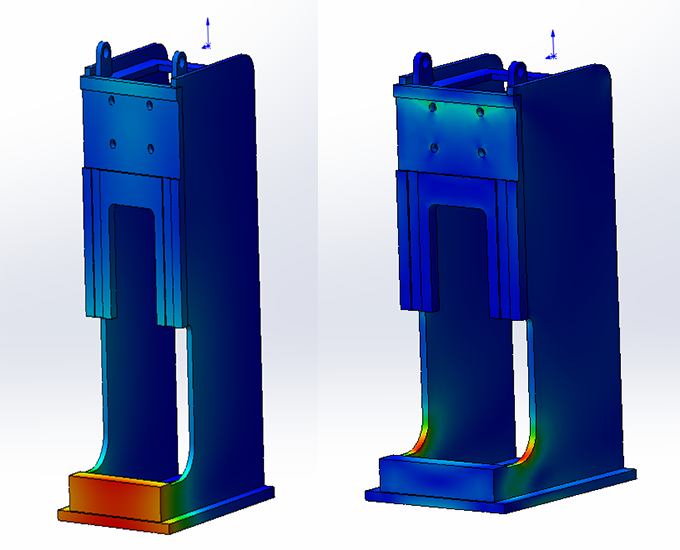
- FEA & Stress Analysis of Small Press Brake
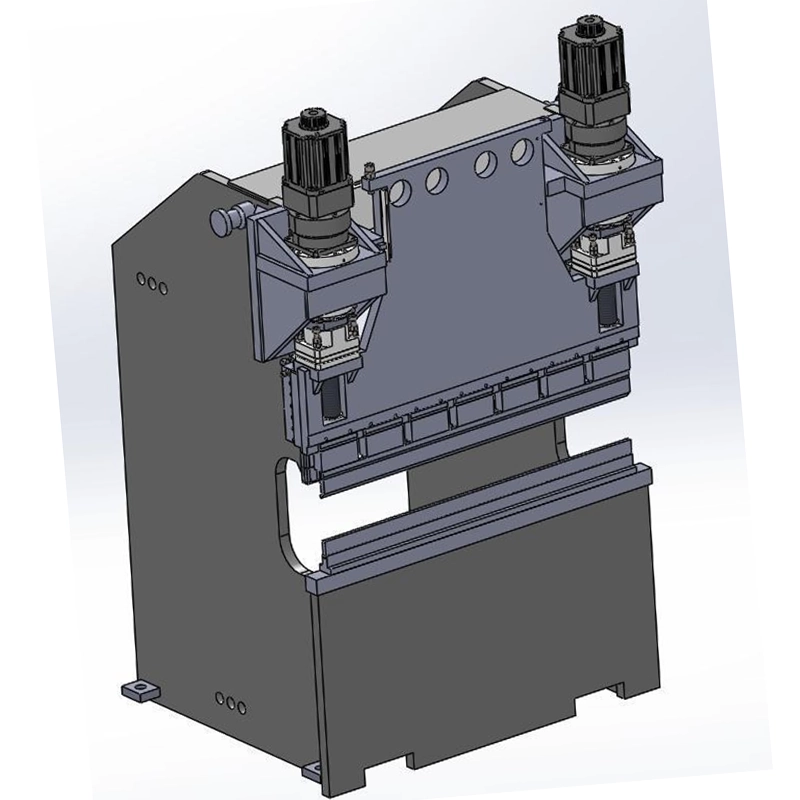
- CAMT evaluate its structural integrity, performance, and efficiency under operational loads. The analysis focuses on key components, including the frame, bending arm, and drive system, modeled using 3D finite element methods. Material properties, such as steel for the frame and high-strength alloys for moving parts, are defined to ensure accuracy. Boundary conditions simulate real-world loading scenarios, including maximum bending forces and torque from the electric motor. The FEA assesses stress distribution, deformation, and fatigue life to identify potential failure points. Results indicate that the machine’s design meets safety and performance requirements, with optimized stiffness and minimal deflection under load. Recommendations for improving structural efficiency and reducing material usage are provided based on the analysis. This study demonstrates the effectiveness of FEA in enhancing the design and reliability of pure electric bending machines.
- The system supports 4-axis control, meeting the highest control conditions of 4+2 axis bending machine
- VICHI Servo Drive Theory
- Servo Pure Press Brake Direcly Drive-Structure &Principle
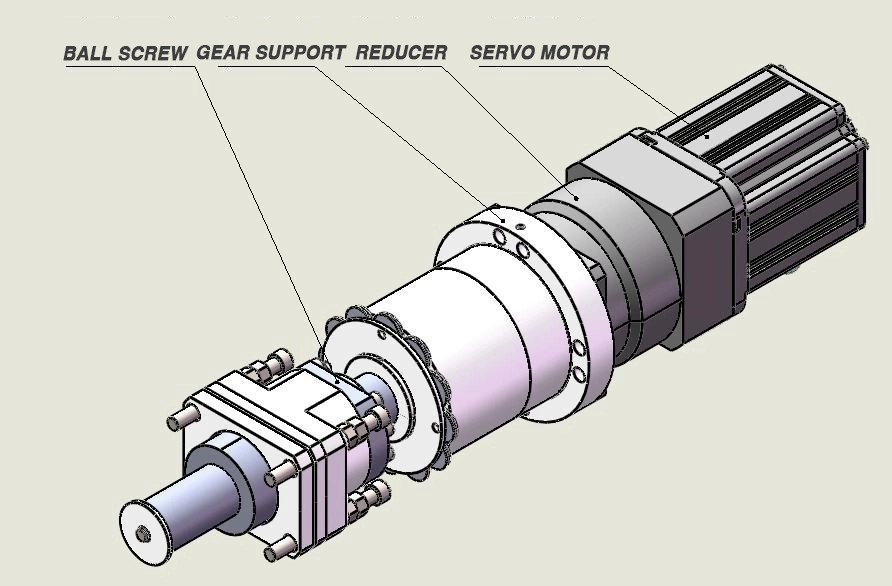
- The innovative design of a direct-connected all-electric servo press brake integrates a servo motor, reducer, and heavy-duty lead screw in a streamlined configuration, eliminating the synchronous pulley mechanism. This approach resolves issues associated with synchronous pulley systems, such as high noise levels and safety concerns due to belt breakage. The new design offers low noise, minimal repeat positioning error, a simple and reliable structure, and reduced costs.
- In this system, the servo motor directly drives the reducer and lead screw, enabling rotational motion. The lead screw nut, driven by the screw’s rotation, moves vertically, actuating the slider. The slider, in turn, drives the upper mold to perform vertical movements, facilitating precise sheet metal bending. This direct-connection mechanism enhances operational efficiency, reliability, and precision while maintaining a cost-effective and compact design, making it an ideal solution for modern sheet metal processing.
Direct-Connect Design
FEA accurately predicts stress distribution patterns, deformation characteristics, and load-bearing capacities under various operating conditions. This advanced analytical approach enables engineers to identify and reinforce potential weak points in the frame, ram, and bed assembly while optimizing material usage through topology optimization techniques. The analysis specifically targets critical performance factors including ram deflection compensation accuracy, structural vibration damping, and fatigue resistance under cyclic loading conditions. Through iterative simulation processes, FEA facilitates the development of press brakes with enhanced rigidity-to-weight ratios, improved energy efficiency, and prolonged service life.
Compared to synchronous belt systems, the direct-connected design is easier to assemble and more reliable.
Tandem machine management(option, can up to 4 machines)
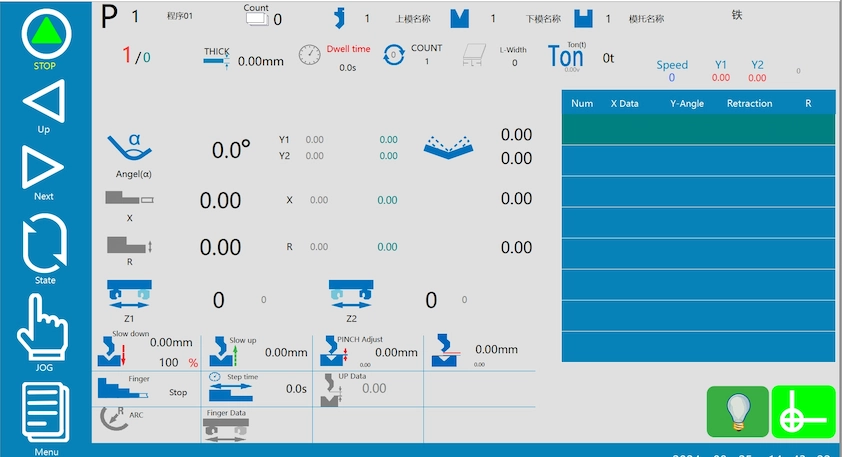
ESA S650W 2D Graphical CNC System
- No limit in both performances and flexibility.
- "The powerful built-in Pc allows having on the machine a real 3D cad cam (metallix, radan, esa)
- he servo motor is equipped with an absolute encoder, eliminating the need to search for the zero position upon startup
- Direct import of tools shapes (.dxf files) and management of tool library.
- Tool and die holders management.
- Angle measurement and correction with all existing devices is available.
Unlike hydraulic systems, which require regular oil changes and are prone to pump, valve, and seal failures, pure electric bending machines feature a simple transmission system with minimal maintenance needs, typically limited to periodic lubrication
Product Feature:
High-Speed Performance
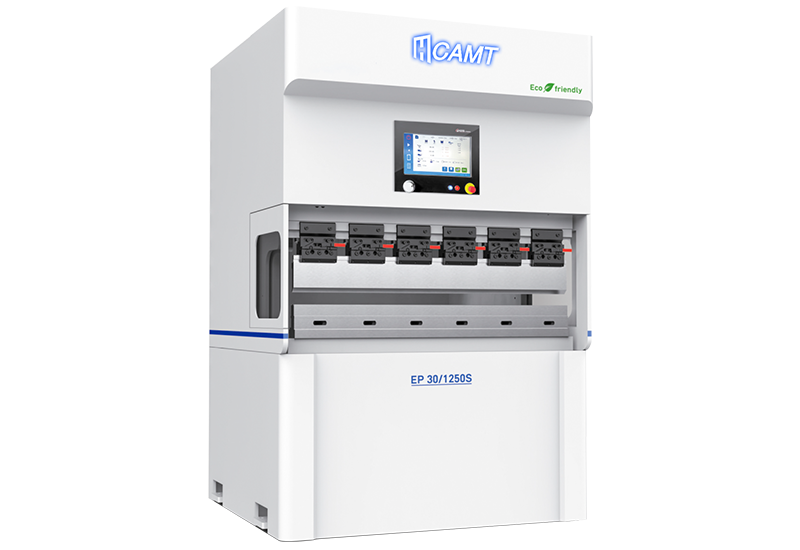
CAMT developed to meet market demands, featuring powerful functionality, rich built-in resources, and characteristics of safety, efficiency, energy savings, and environmental friendliness.
Advanced sheet metal bending and motion control algorithms, with the mainboard utilizing industrial-grade chips. The CNC system has passed EMC electromagnetic compatibility verification and high/low-temperature environmental adaptability testing.
All-Electric Servo Drive Press Brake:
Reliable Performance, High Precision under Fast Speed, Energy Saving
- employs high-speed acceleration/deceleration and trajectory look-ahead algorithms, enabling pre-planned motion trajectories based on bending speed and vector characteristics before the bending process. This ensures optimal bending precision and smooth motion characteristics during high-speed operations, effectively integrating high speed with high accuracy.
- Y-axis maximum rapid feed speed of 200 mm/s, maximum working feed speed of 30 mm/s.
- Repeat positioning accuracy of ±0.01 mm.
- Eliminates the impact of oil temperature variations on the consistency of bent workpieces.
- Exceptionally Energy-Saving and Eco-Friendly
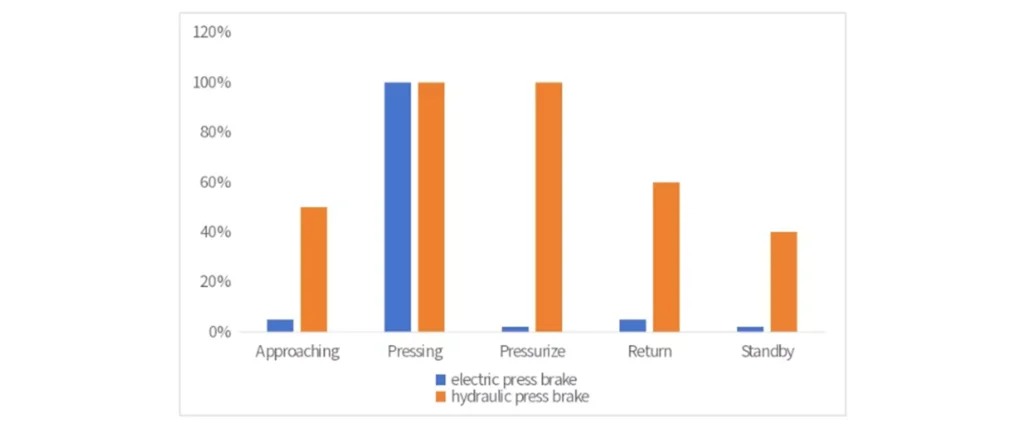
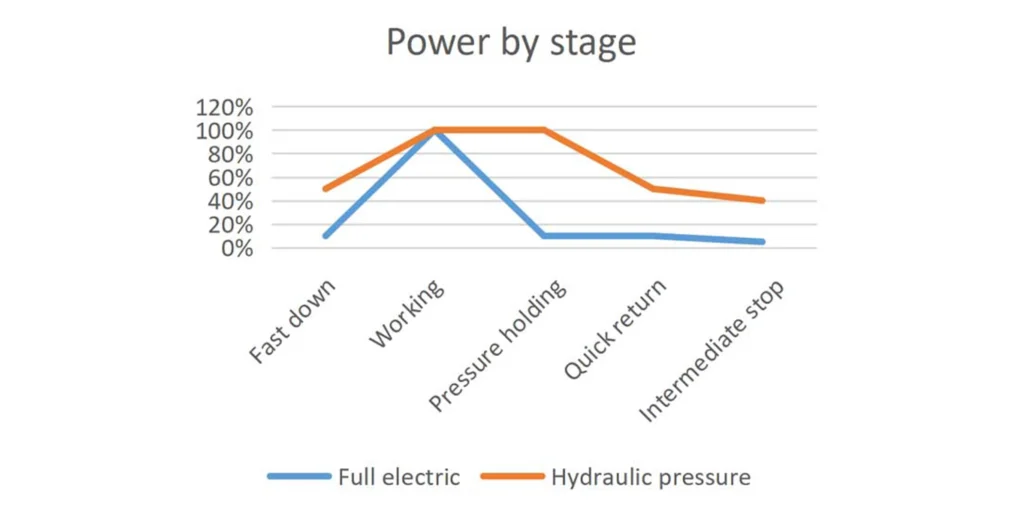
- The all-electric servo press brake consumes electricity similarly to an inverter air conditioner compared to a conventional one, automatically adjusting power output based on operating conditions for exceptional energy savings.
- Eliminates the need for hydraulic oil and its replacement, preventing environmental pollution from waste oil.
breadcrumbs
- El sistema servoaccionado consume energía proporcional a la carga, reduciendo significativamente el uso de energía. Se consume una potencia mínima cuando el deslizador está inactivo, a diferencia de las máquinas hidráulicas que consumen energía continuamente. La eficiencia de la transmisión principal supera el 95%, en comparación con menos del 80% para los sistemas hidráulicos, y la eficiencia hidráulica disminuye aún más debido al envejecimiento y al desgaste.
- La eliminación del aceite hidráulico elimina la necesidad de cambios de aceite, mantenimiento de componentes hidráulicos y manejo de fugas diarias de aceite. Esto reduce la eliminación de aceite residual y la contaminación. Las altas velocidades del deslizador y la eficiencia de producción contribuyen aún más a operaciones ecológicas.
- Las velocidades de plegado ajustables permiten un control preciso para diferentes espesores de material, tipos y longitudes de plegado, asegurando una alta precisión (error de ángulo de ±0.5°) en comparación con las máquinas hidráulicas (error de ±1°). El sistema de accionamiento directo mejora la precisión de la transmisión sin requerir costosos sistemas de circuito cerrado.
- A diferencia de los sistemas hidráulicos, que requieren cambios de aceite regulares y son propensos a fallas de bombas, válvulas y sellos, las máquinas de plegado puramente eléctricas cuentan con un sistema de transmisión simple con necesidades de mantenimiento mínimas, típicamente limitadas a la lubricación periódica.
Característica del producto:
Las máquinas de plegado puramente eléctricas CAMT ofrecen el doble de eficiencia que los sistemas hidráulicos, consumiendo solo la mitad de energía.
CAMT desarrollado para satisfacer las demandas del mercado, con una funcionalidad potente, ricos recursos incorporados y características de seguridad, eficiencia, ahorro de energía y respeto al medio ambiente.
Algoritmos avanzados de plegado de chapa y control de movimiento, con la placa base utilizando chips de grado industrial. El sistema CNC ha pasado la verificación de compatibilidad electromagnética EMC y las pruebas de adaptabilidad ambiental a altas/bajas temperaturas.
Plegadora Servoeléctrica Totalmente Eléctrica:
Rendimiento Fiable, Alta Precisión a Alta Velocidad, Ahorro de Energía
emplea algoritmos de aceleración/desaceleración de alta velocidad y de anticipación de trayectoria, lo que permite trayectorias de movimiento preplanificadas basadas en la velocidad de plegado y las características vectoriales antes del proceso de plegado. Esto asegura una precisión de plegado óptima y características de movimiento suaves durante operaciones de alta velocidad, integrando eficazmente la alta velocidad con la alta precisión.
- Velocidad máxima de avance rápido del eje Y de 200 mm/s, velocidad máxima de avance de trabajo de 30 mm/s.
- Precisión de posicionamiento repetitivo de ±0.01 mm.
- Elimina el impacto de las variaciones de temperatura del aceite en la consistencia de las piezas plegadas.
Excepcionalmente Ahorro de Energía y Respetuoso con el Medio Ambiente
La plegadora servoeléctrica totalmente eléctrica consume electricidad de manera similar a un aire acondicionado inverter en comparación con uno convencional, ajustando automáticamente la potencia de salida según las condiciones de funcionamiento para un ahorro de energía excepcional.
Elimina la necesidad de aceite hidráulico y su reemplazo, previniendo la contaminación ambiental por aceite usado.