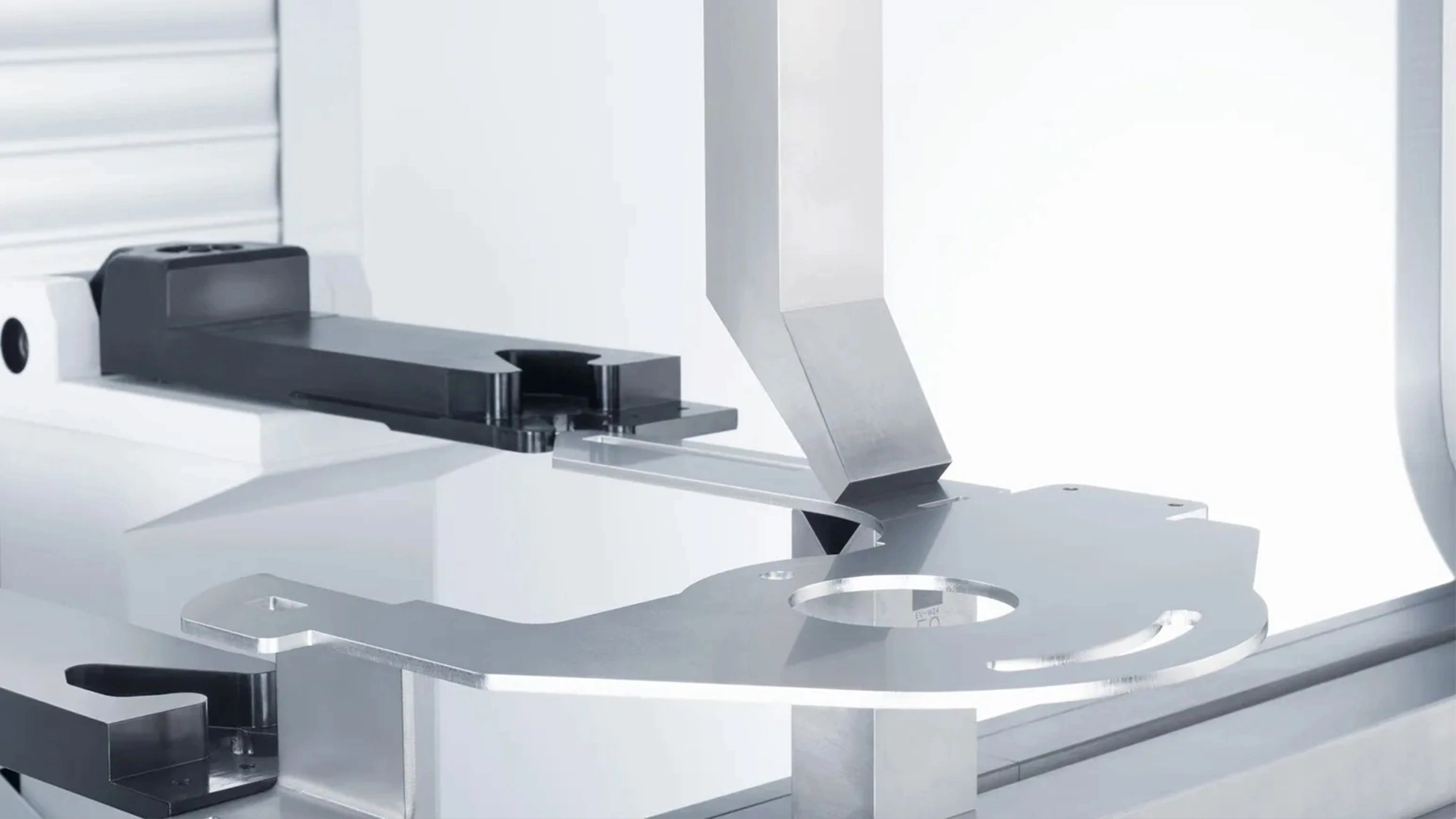







Working Principle and Advantages of Electric Press Brake
전기 프레스 브레이크가 새로운 산업 표준이 되는 이유
최근 몇 년 동안 판금 가공은 기존 솔루션이 새로운 생산 요구 사항을 더 이상 충족하지 못하는 단계에 접어들었습니다. 고객들은 더 엄격한 공차, 더 빠른 납기, 더 낮은 에너지 소비, 그리고 더 환경 친화적인 제조를 기대합니다. 동시에 제조업체들은 인건비 상승, 더 엄격한 안전 규제, 그리고 생산 라인 디지털화에 대한 압력 증가에 직면하고 있습니다.
이러한 배경 속에서, 전기 프레스 브레이크 는 틈새 솔루션에서 유압 절곡기의 실용적인 대안으로 발전했습니다. 오일 압력, 밸브 및 복잡한 유체 제어에 의존하는 유압 프레스 브레이크와 달리, 전기 프레스 브레이크는 서보 모터와 정밀 변속 부품을 통해 전기 에너지를 제어된 기계적 움직임으로 직접 변환합니다.
다양한 기술적 접근 방식 중에서, 다이렉트 드라이브 전전기 프레스 브레이크는 단순성, 안정성 및 장기적인 신뢰성으로 두드러집니다. 유압 시스템과 동기 벨트 메커니즘을 제거함으로써, 이 아키텍처는 절곡력, 동작 정확도 및 안전이 달성되는 방식을 근본적으로 변화시킵니다.
이 글은 다이렉트 드라이브 전기 프레스 브레이크의 작동 원리, 제어 로직, 그리고 정밀 제조, 에너지 효율성, 유지보수 및 지능형 생산 환경에서 제공하는 실질적인 이점을 설명합니다.

1. 다이렉트 드라이브 전기 프레스 브레이크의 기계적 구조 및 작동 원리
1.1 안정성을 위해 구축된 단순화된 기계적 아키텍처
현대 전기 프레스 브레이크의 핵심은 구동 시스템입니다. 다이렉트 드라이브 구성에서는 서보 모터, 감속 기어박스 및 고하중 볼 스크류가 직선의 동축 라인으로 연결됩니다. 이 설계는 진동, 소음, 마모 및 예기치 않은 고장의 일반적인 원인인 기존의 동기 풀리 및 벨트의 필요성을 제거합니다.
서보 모터가 회전하면 토크가 감속 기어박스로 직접 전달되며, 감속 기어박스는 정밀한 속도 제어를 유지하면서 출력 토크를 증가시킵니다. 그런 다음 기어박스는 볼 스크류를 구동하여 회전 운동을 볼 너트를 통해 선형 운동으로 변환합니다. 이 선형 운동은 램을 수직으로 움직여 상부 툴을 운반하여 절곡 작업을 수행합니다.
동력 전달이 직접적이고 연속적이므로 기계적 손실이 최소화됩니다. 그 결과 빠른 응답, 안정적인 힘 출력 및 뛰어난 반복 위치 결정 정확도를 갖춘 고효율 모션 시스템이 탄생합니다.
1.2 브레이크 모터 없는 중력 균형
전기 프레스 브레이크 설계의 주요 엔지니어링 과제 중 하나는 램의 무게를 관리하는 것입니다. 기존 솔루션에서는 전원이 제거될 때 램이 떨어지는 것을 방지하기 위해 브레이크 모터 또는 기계적 잠금 시스템이 사용됩니다. 이러한 구성 요소는 비용, 복잡성 및 잠재적인 정확도 손실을 추가합니다.
다이렉트 드라이브 전기 프레스 브레이크에서는 램의 중력을 상쇄하는 자기 감쇠 균형 시스템을 통해 이 문제가 해결됩니다. 기계적으로 하중의 균형을 맞춤으로써 서보 모터는 더 이상 홀딩 브레이크를 필요로 하지 않습니다.
이 접근 방식은 구조를 단순화하고 에너지 소비를 줄이며 위치 결정 안정성을 향상시킵니다. 브레이크 작동 또는 해제 없이 램은 서보 명령에 더 부드럽게 반응하여 일관된 절곡 각도와 기계적 마모 감소에 기여합니다.
1.3 높은 반복성을 위한 백래시 제거
High-precision bending depends not only on positioning accuracy but also on repeatability over long production cycles. In direct-drive electric press brakes, backlash is eliminated through preloaded thrust bearings and locking nut assemblies.
By preloading the thrust bearings, axial clearance in the ball screw system is removed. This ensures that the ram follows servo commands immediately, without delay or reverse motion play. As a result, the machine maintains stable bending accuracy even after extended operation, avoiding the cumulative errors often seen in belt-driven or hydraulic systems.

2. Control System Architecture and Motion Logic
2.1 Embedded Human–Machine Interface
The control system of an electric press brake typically consists of an embedded industrial controller combined with a numerical control (NC) motion framework. The embedded unit is based on an ARM processor and integrates a touchscreen interface for daily operation.
Running on a Linux operating system, the embedded controller hosts the human–machine interface software used for part programming, parameter setting, tool management, and machine diagnostics. This separation between user interaction and motion execution improves system stability and reduces the risk of control delays during operation.
2.2 Dedicated High-Speed Motion Control Module
Real-time motion control is handled by a dedicated NC module equipped with a high-performance DSP processor. This processor is optimized for multi-axis motion control and high floating-point precision, allowing accurate interpolation and synchronization of servo movements.
The NC module supports linear displacement sensor inputs, analog and digital I/O interfaces, and industrial communication protocols such as RS485. This configuration enables precise feedback processing and stable control even during high-speed bending cycles.
2.3 From Program to Motion: Control Workflow
During operation, the operator creates a bending program on the embedded interface based on the sheet metal drawing and required process parameters. The system converts this information into G-code instructions and transmits them to the NC motion controller via an internal network.
The NC controller interprets the G-code and controls the servo systems using a pulse-and-direction mode. During the bending stroke, servo torque is regulated in real time according to material thickness, bending length, and target angle. This allows the ram to deliver only the required force, avoiding unnecessary stress on tools and machine components.
Unlike hydraulic systems, where force control is influenced by oil compressibility and temperature fluctuations, electric press brakes provide direct, predictable force output through servo torque control.

3. Direct-Drive Electric Press Brakes Compared with Traditional Transmission Systems
Traditional electric press brakes often rely on synchronous belts to transmit motion from the motor to the screw. While functional, these systems introduce additional components that require adjustment, maintenance, and periodic replacement.
In contrast, direct-drive systems offer a more robust solution. The elimination of belts reduces assembly complexity and removes the risk of belt breakage, which can cause uncontrolled ram movement in extreme cases. This significantly improves operational safety.
Noise levels are also lower. Without belt vibration, hydraulic pumps, or fluid flow noise, direct-drive electric press brakes typically operate below 75 dB. This creates a more comfortable working environment and helps manufacturers comply with workplace noise regulations.
High-speed servo motors, often rated up to 4000 rpm, enable faster approach and return speeds. Combined with absolute encoders, these motors allow the machine to retain position information after power-off, eliminating the need for homing procedures during startup.

4. Practical Advantages of Electric Press Brakes in Production Environments
4.1 Precision and Repeatability for High-Value Applications
Electric press brakes achieve positioning accuracy as high as ±0.01 mm due to ball screw transmission and servo control. This level of precision is essential in industries such as electronics, new energy equipment, and medical devices, where dimensional consistency is critical.
Angle control is equally precise. With real-time torque adjustment and optional laser angle measurement systems, angle deviations can be kept within ±0.5 degrees. In comparison, hydraulic press brakes often experience angle variations of ±1 to ±2 degrees due to oil compression and temperature changes.
For long workpieces, multi-axis servo synchronization ensures uniform bending across the entire length, preventing common defects such as end lifting or uneven angles.
4.2 Energy Efficiency and Environmental Performance
Electric press brakes consume power only during active motion. When idle, energy consumption is close to zero. Hydraulic press brakes, by contrast, require continuous pump operation, resulting in significantly higher energy usage.
In practical terms, electric press brakes can reduce energy consumption by 40–60% per bending cycle. The absence of hydraulic oil also eliminates the risk of leaks, reduces waste, and simplifies environmental compliance.
4.3 Productivity and Flexibility
High approach speeds, fast servo response, and quick program switching make electric press brakes well suited for high-mix, low-volume production. Non-productive time is reduced, and operators can switch between different parts with minimal setup.
With modern CNC systems, hundreds of bending programs can be stored and recalled instantly. When combined with quick-change tooling systems, changeover times can be reduced from tens of minutes to just a few minutes.
4.4 Reduced Maintenance and Long Service Life
By eliminating hydraulic cylinders, valves, seals, and oil circuits, electric press brakes significantly reduce maintenance requirements. Key components such as ball screws and linear guides have long service lives and require only periodic lubrication.
Maintenance intervals are extended, downtime is reduced, and overall equipment availability is improved. Over the machine’s lifecycle, this results in a lower total cost of ownership compared with hydraulic alternatives.
4.5 Compatibility with Intelligent Manufacturing Systems
Electric press brakes are inherently compatible with Industry 4.0 concepts. Their digital control systems support data collection, production monitoring, and integration with MES or ERP systems.
Remote diagnostics, predictive maintenance, and software updates allow manufacturers to optimize machine performance continuously. Optional laser angle detection enables automatic compensation for material springback, reducing operator dependence and improving consistency.

Conclusion: A Technology Shift Driven by Manufacturing Reality
The move from hydraulic to electric press brakes reflects a broader shift toward precision, efficiency, and sustainability in manufacturing. Direct-drive all-electric press brake technology addresses long-standing challenges in bending accuracy, energy consumption, maintenance, and safety.
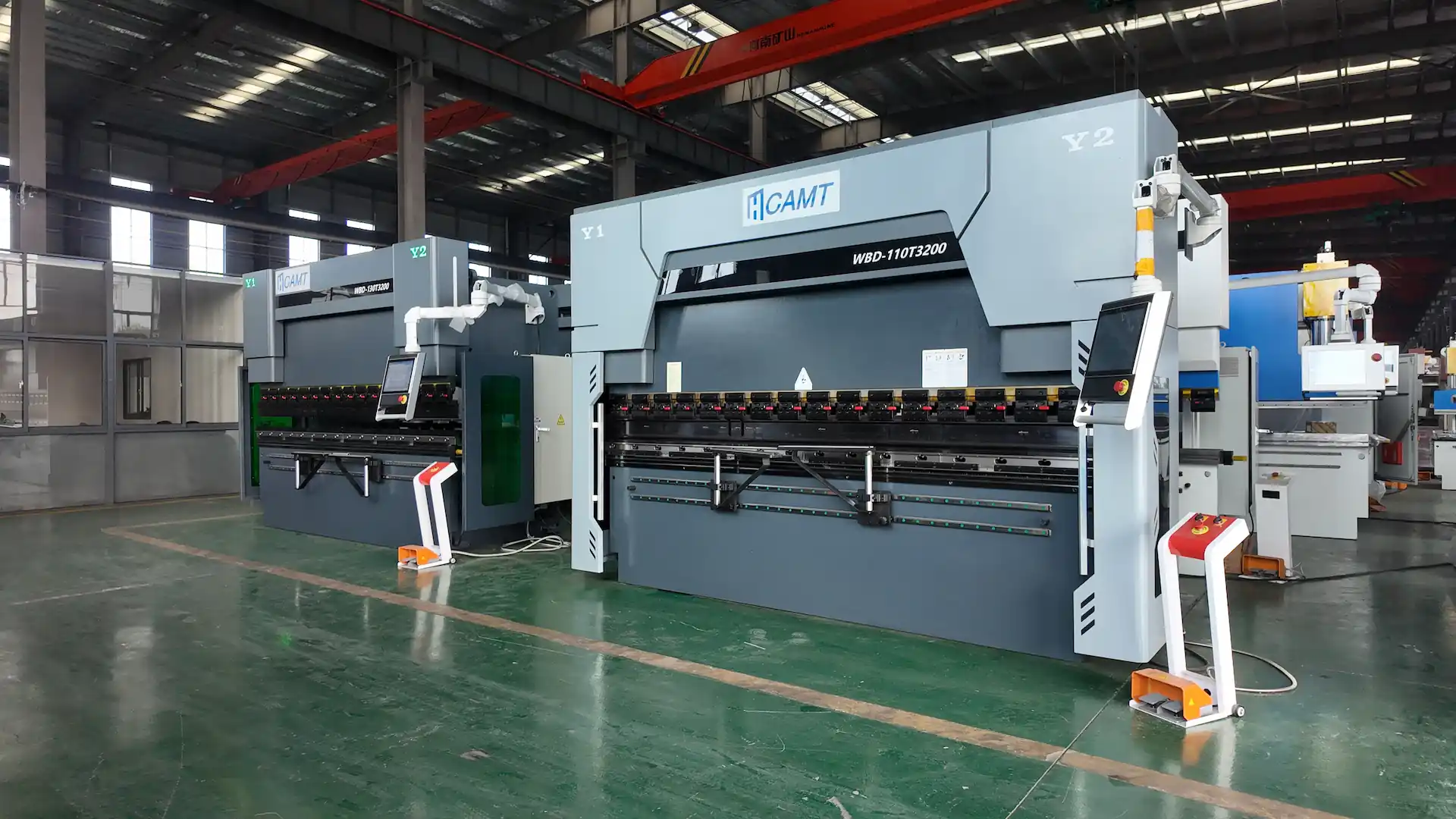
This architecture is no longer experimental. It has been validated in real production environments and adopted by machine builders such as CAMT, where direct-drive electric press brakes are already operating reliably in continuous industrial use. These implementations demonstrate that electric press brakes are not just theoretically superior, but practically proven.
For manufacturers seeking stable accuracy, lower operating costs, and readiness for intelligent production, electric press brakes represent a clear and forward-looking solution.
FAQ – Electric Press Brake Technology
What is an electric press brake?
An electric press brake uses servo motors and precision mechanical transmission instead of hydraulic oil to perform bending operations, offering higher accuracy and energy efficie
Are electric press brakes suitable for industrial production?
Yes. Modern direct-drive designs have been validated in continuous production environments and can handle demanding bending tasks with stable performance.
How do electric press brakes reduce maintenance costs?
They eliminate hydraulic components such as pumps, valves, and seals, reducing wear parts and extending maintenance intervals.
Do electric press brakes consume less energy?
Yes. Energy is consumed only during active bending motion, resulting in significant savings compared with hydraulic machines.
Can electric press brakes integrate with smart factory systems?
Yes. They support digital connectivity, data monitoring, remote diagnostics, and software updates for Industry 4.0 applications.

Metalworking specialist with 12 years of experience in sheet metal fabrication and press brake applications, certified by ASME.