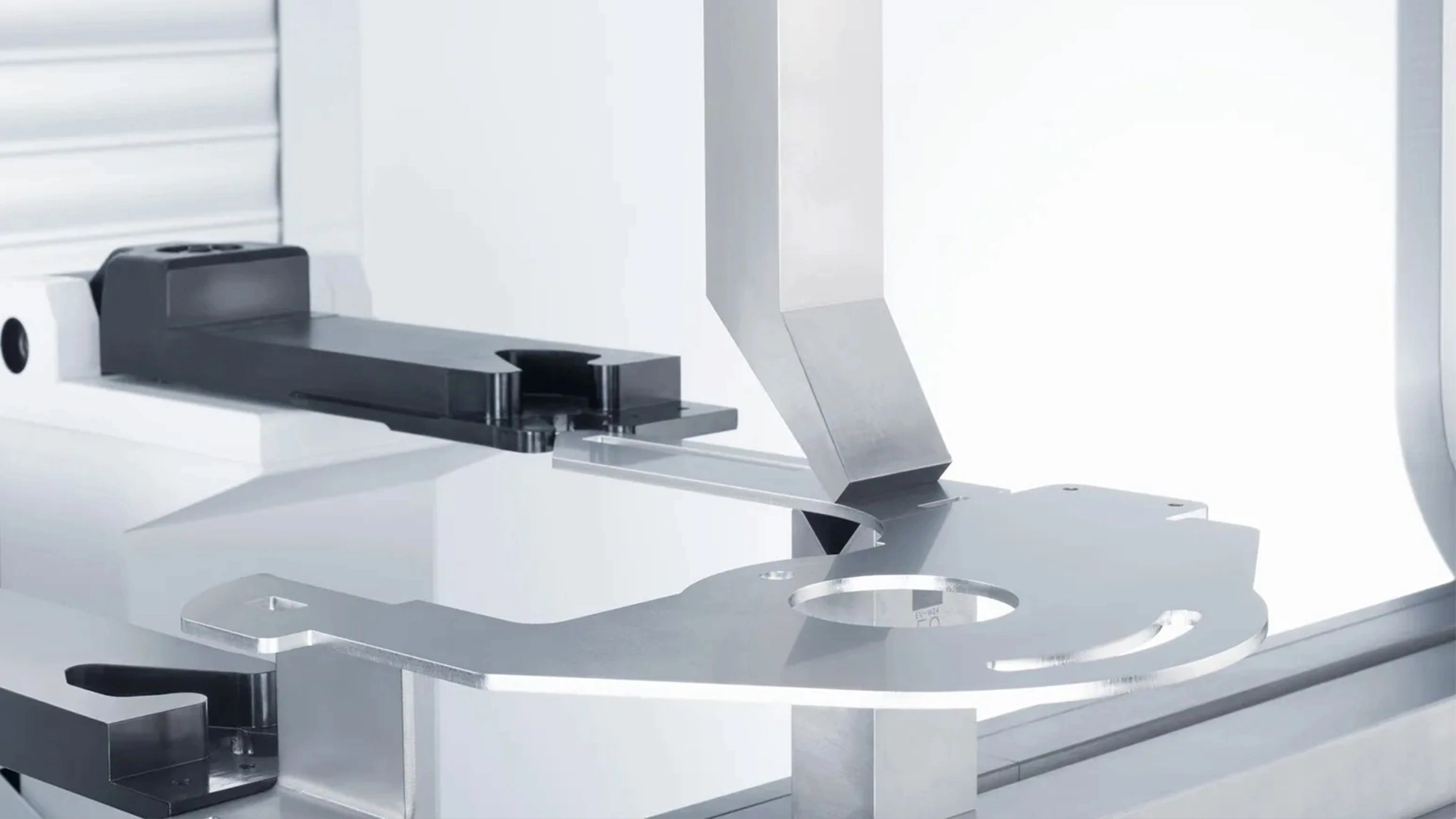







Warum Abkantpressen-Bombierung benötigt wird
Die Durchbiegung des Abkantpressenrahmens ist nach wie vor eine der hartnäckigsten Ursachen für Qualitätsschwankungen beim modernen Blechbiegen. Selbst geringe Mengen an Durchbiegung in der Mitte — typischerweise 0,4–1,5 mm bei 3-Meter-Maschinen — können Winkelabweichungen von ±0,8° bis ±2,2°, depending on material thickness, tensile strength and bend length. This guide provides a current (2026) overview of crowning technologies used in CNC press brakes, including:- Physik und Berechnung der Durchbiegung
- Vergleich von mechanischen, hydraulischen und dynamischen (Echtzeit-)Bombierungssystemen
- Auswahlkriterien und typische ROI-Perioden
- Implementierungsschritte, Programmierrichtlinien und Kalibrierungsprotokolle
- Wartungsempfehlungen und häufige Leistungsprobleme
1. Verständnis der Abkantpressenrahmen-Durchbiegung
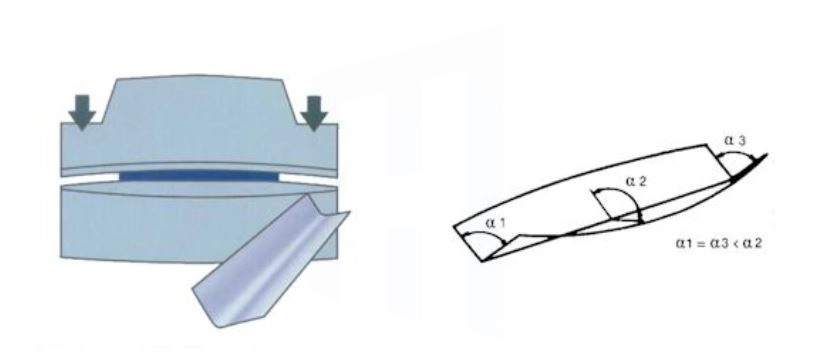
Wenn Biegekraft angewendet wird, erfahren der Oberbalken und das Unterbett eine elastische Verformung in einem annähernd parabolischen Muster. Die maximale Durchbiegung tritt nahe der Mitte der Arbeitslänge auf, da die Seitenrahmen an den Enden der Bewegung widerstehen. Vereinfachte Durchbiegungsformel (Euler–Bernoulli beam theory approximation):δ_max ≈ (F × L³) / (48 × E × I)
- δ_max = center deflection (mm)
- F = total bending force (kN)
- L = distance between side frames (m)
- E = modulus of elasticity of frame material (≈ 210 GPa for cast steel / welded frames)
- I = second moment of area of the beam cross-section (m⁴)
of press brake cylinder failure? typical 100–320 ton, 3-meter press brake
3 mm stainless steel 304, V = 24 mm, required force ≈ 220–260 tons
→ estimated center deflection 0.55–0.85 mm without compensation
→ resulting angle variation ≈ 90.9°–92.1° (center) vs 89.4°–90.1° (ends).
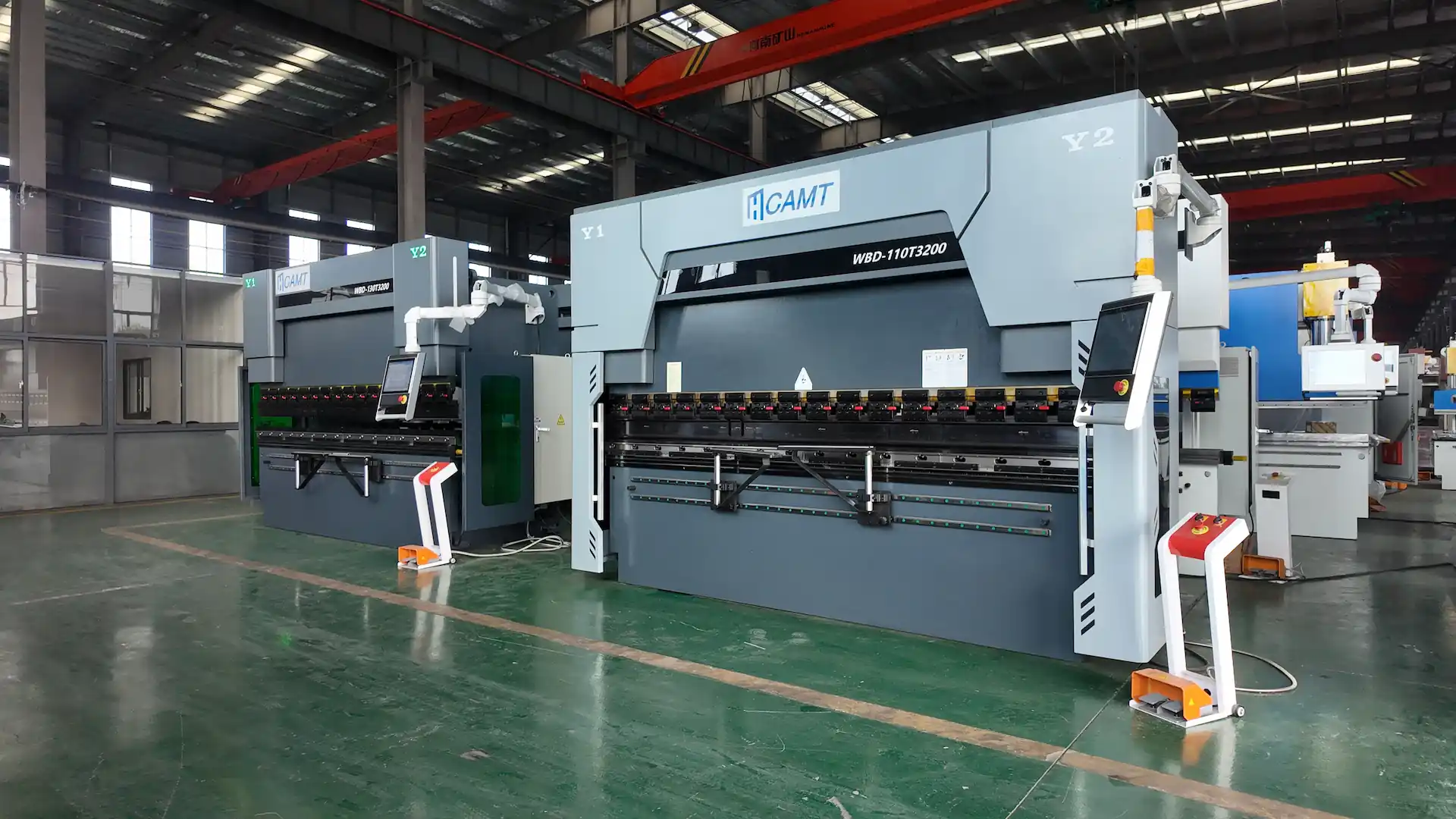
2. 2026 Crowning System Types – Technical Comparison
| Typ | After adjustment, the clearance between guideway surfaces should be no more than 0.05 mm. At the same time, the guideways must not be adjusted too tightly. Excessive preload will increase friction and may reduce fast approach speed or cause unstable movement. | Typical Accuracy | Setup Time | Initial Cost Range (USD) | Best Suited For | Average ROI Period |
|---|---|---|---|---|---|---|
| Mechanical (wedge / shim) | Manual wedge position or shim stack | ±0.4° – ±0.8° | 10–25 min | 4,000 – 9,500 | High-volume production of similar parts | 12–18 months |
| Hydraulic (cylinder-based) | Proportional hydraulic cylinders | ±0.15° – ±0.4° | 1–6 min | 11,000 – 24,000 | Job shops with 20–120 daily setups | 6–11 months |
| Dynamic / Adaptive CNC | Real-time sensor feedback + CNC interpolation | ±0.05° – ±0.15° | <90 sec | 22,000 – 42,000 | High-mix, tight tolerance, Industry 4.0 | 4–8 months |
3. Most Common Sources of Crowning-Related Quality Issues (2026)
- Using fixed mechanical crowning for >12 different material / thickness combinations per shift
- Compensation tables not updated after punch / die change (V-opening change of 2–4 mm can shift required crowning by 30–60%)
- Insufficient compensation for springback differences: austenitic stainless typically requires 20–35% more crowning stroke than mild steel
- Hydraulic pressure instability caused by air in lines, worn seals or contaminated fluid
- Lack of monthly verification bends → gradual accuracy drift of 0.3–0.8° over 4–8 months
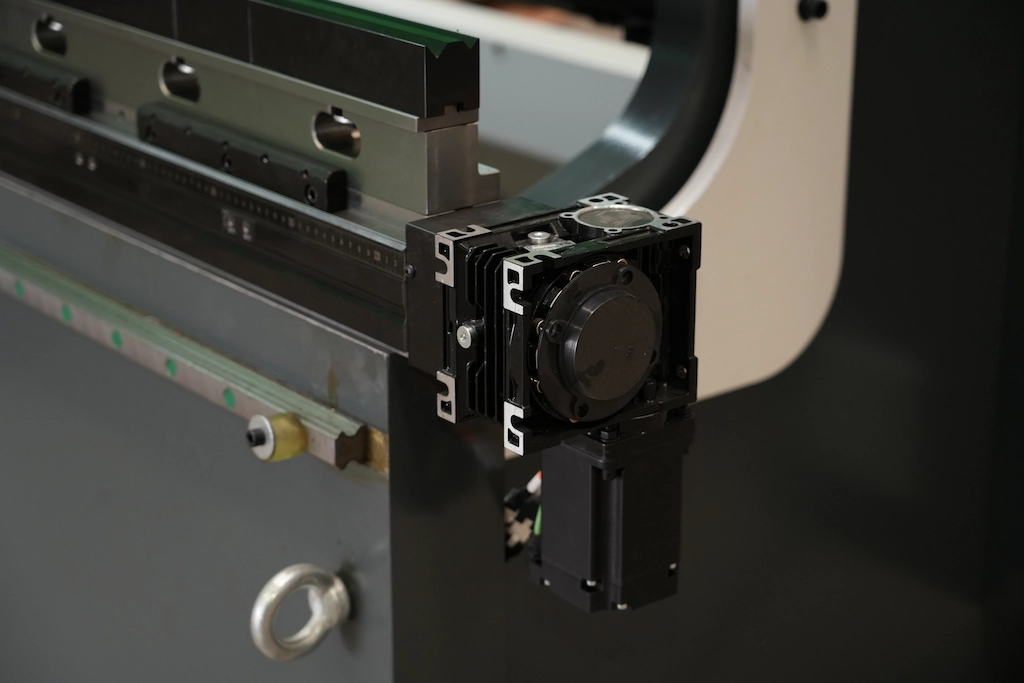
4. Practical Implementation Steps (2026 Standard Procedure)
- Baseline deflection measurement Perform test bends on representative materials… Record angle at 300–500 mm intervals.
- Create material-specific compensation library Typical starting values (3-meter machine): • Mild steel 2–4 mm → 1.8–3.2 mm crowning • 304/316 SS 2–4 mm → 2.6–4.5 mm • Hardox 450 6–10 mm → 5.5–9.0 mm
- Enable dynamic / adaptive mode (if available)
- Validation & fine-tuning Bend 3–5 test pieces → adjust until variation ≤ ±0.12°(Detailed step-by-step guide on trial bends, angle measurement corrections, and avoiding over/under crowning)
- Activate in-process monitoring (if supported)
5. Recommended Maintenance & Calibration Schedule
| Task | Frequency | Purpose / Expected Outcome |
|---|---|---|
| Visual inspection of cylinders & lines | Weekly | Detect leaks, contamination, damage |
| Bleed air from hydraulic system | Weekly–Bi-weekly | Eliminate pressure fluctuation (0.2–0.6° drift) |
| Full calibration test bends | Monthly | Verify accuracy remains within ±0.15° |
| Sensor zero / gain recalibration | Quarterly | Maintain dynamic system precision |
| Complete system service (seals, filters, oil) | Annually | Extend service life 4–7 years |
Understanding press brake deflection compensation types and proper usage for accuracy.
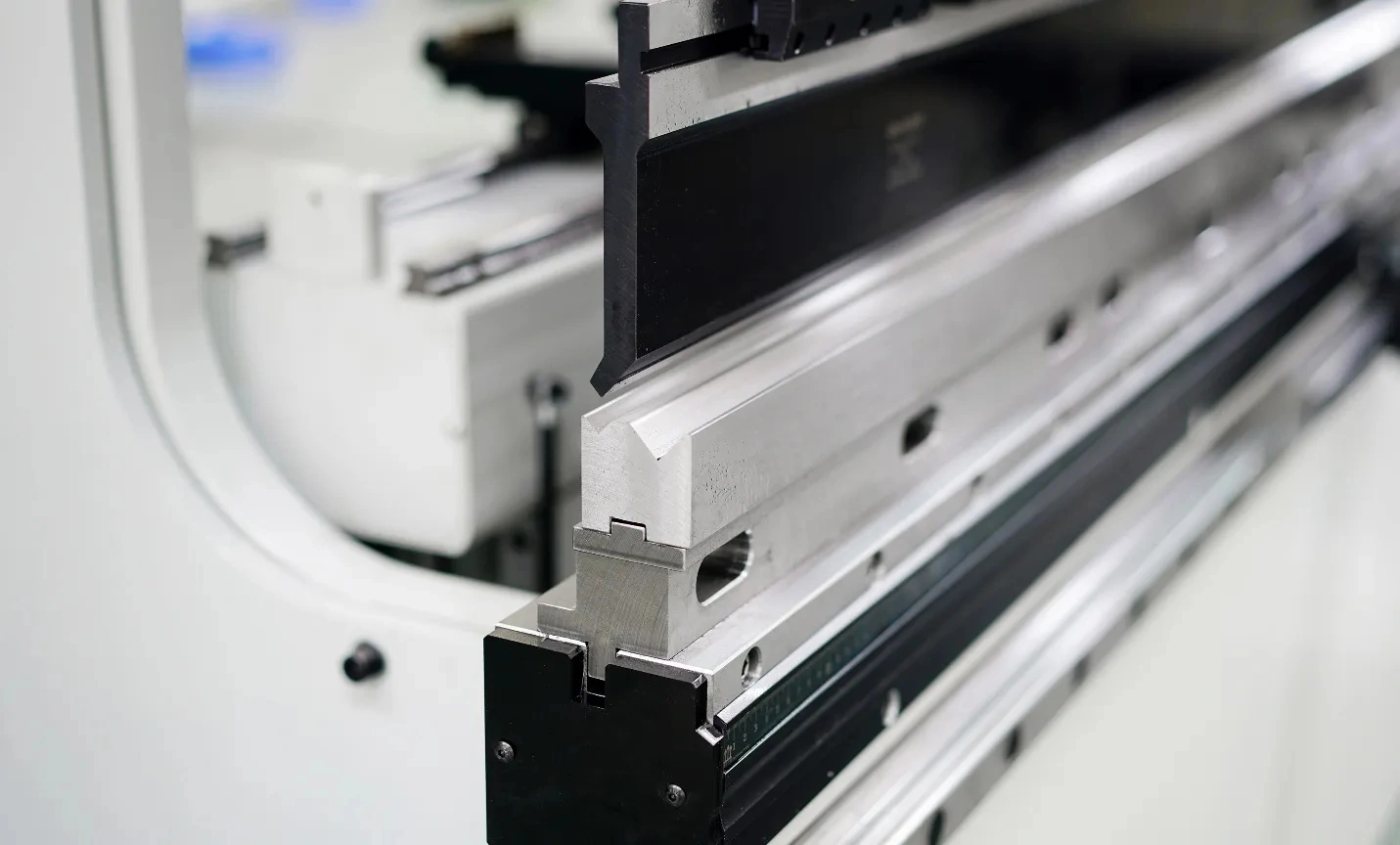
6. Summary – Choosing the Right Crowning Solution in 2026
- High-volume, low-mix production → mechanical crowning remains cost-effective
- Medium to high mix job shops → hydraulic crowning offers best balance
- High-value parts, tight tolerances, advanced alloys → dynamic real-time adaptive crowning delivers the lowest scrap rate and fastest payback
Conclusion: Deflection compensation is no longer optional for competitive fabrication shops. Accurate crowning directly impacts first-pass yield, rework hours, material waste and customer satisfaction.
For machine-specific recommendations or current compensation table templates suitable for Delem, Cybelec or ESA controls, refer to manufacturer documentation or consult your press brake supplier.