






Was beeinflusst den Preis einer Abkantpresse
Der Kauf einer Abkantpresse bleibt eine der größten Investitionsentscheidungen für Metallverarbeiter, Lohnfertiger und OEMs. Da der globale Markt für Abkantpressen voraussichtlich etwa 800 Millionen US-Dollar im Jahr 2026 Market Trends and Selection Suggestions: Navigating the Future bis 2033 mit einer CAGR von 6,1 % wachsen wird, stehen Hersteller vor mehr Optionen als je zuvor – hydraulische Arbeitspferde, energieeffiziente elektrische Servomodelle, Hybridsysteme und vollrobotische Biegezellen.
Der Listenpreis ist nur der Anfang. Presskraft, Biegelänge, CNC-Komplexität, Antriebsart, Bombierungstechnologie, Automatisierungsgrad und Markenherkunft bestimmen zusammen 80-90 % der Endkosten. Das Verständnis dieser sieben Kernvariablen – und der Gesamtbetriebskosten (TCO) über 5–10 Jahre – kann 25-40 % der langfristigen Ausgaben einsparen und gleichzeitig Produktivität und Präzision steigern.
Dieser Leitfaden liefert eine aktuelle, datengestützte Aufschlüsselung basierend auf den Marktgegebenheiten von 2026. Er enthält reale Preisspannen, Einflussfaktoren in Prozent, ROI-Beispiele und ein praktisches TCO-Framework, um Ihnen zu helfen, eine fundierte Investition zu tätigen.
Key Takeaways
- Tonnage verursacht 40-60 % der Preisunterschiede – der größte Einzelfaktor.
- Biegelänge verursacht exponentielle Kosten, sobald Sie 4 Meter überschreiten.
- Elektrische/Hybridantriebe kosten anfänglich 20-50 % mehr, liefern aber 30-70 % Energieeinsparungen und einen ROI von 2-3 Jahren.
- Fortschrittliche CNC + automatische Bombierung kann die Erstteilgenauigkeit um 25% verbessern und Ausschuss reduzieren.
- Roboterintegration kostet zusätzlich $50.000–$150.000+, senkt aber die Arbeitskosten in Betrieben mit hohem Volumen drastisch.
- Marke & Herkunft erzeugen Preisunterschiede von 30-100% (Chinesisch vs. Europäisch), die oft Unterschiede bei Service und Langlebigkeit widerspiegeln.
- TCO ist wichtiger als der Kaufpreis—Energie, Wartung und Ausfallzeiten können die ursprüngliche Investition über 5 Jahre erreichen oder übersteigen.
Die 7 Kernvariablen, die die Kosten einer Abkantpresse im Jahr 2026 bestimmen
1. Tonnagekapazität (40-60% des gesamten Preiseinflusses)
Tonnage (Biegekraft) bleibt der dominierende Kostentreiber. Höhere Tonnage erfordert schwerere Rahmen, größere Hydraulik-/Elektrosysteme, dickeren Stahl und robustere Komponenten.
Preisbenchmarks 2026 nach Tonnageklasse (CNC-Modelle, ca. USD)
| Tonnageklasse | Typische Preisspanne (USD) | Häufige Anwendungen | Preisaufschlag vs. Basis |
| Niedrig (≤63 Tonnen) | $8,000 – $25,000 | Dünnblech, HLK, Gehäuse | Basis |
| Mittel (80-220 Tonnen) | $22,000 – $55,000 | Allgemeine Fertigung, Halterungen | +40-80% |
| Hoch (300-500 Tonnen) | $50,000 – $95,000 | Struktur, schwere Platte | +120-200% |
| Sehr hoch (≥600 Tonnen) | $120,000 – $350,000+ | Großindustriell | +300%+ |
Profi-Tipp: Eine Verdoppelung der Tonnage verdoppelt selten den Preis – sie vervierfacht oft die Kosten für Struktur und Antriebssystem. Berechnen Sie die erforderliche Tonnage immer anhand von Materialstärke, Zugfestigkeit und Biegelängenformeln, bevor Sie überdimensionieren.
2. Maschinenlänge / Bettlänge (15-25% des Preiseinflusses)
Längere Betten erfordern proportional stärkere Rahmen, größere Stößel und eine präzisere Durchbiegungskontrolle.
2026 Preisstufen nach Bettlänge
| Länge (Meter) | Typische Biegekapazität | Ca. Preisspanne (USD) | Premium vs. 3m Basis |
| 3–4 m | Leichte bis mittelschwere Ausführung | 20.000 $ – 50.000 $ | Basis |
| 6–8 m | Mittelschwere bis schwere Ausführung | 40.000 $ – 100.000 $ | +60-100% |
| 10–12 m+ | Schwere Ausführung / Tandem-Setups | 80.000 $ – 200.000 $+ | +150-300% |
Kundenspezifische Längen, die über die Standardgrößen hinausgehen, verursachen 15-30 % Aufschläge für Engineering und verstärkte Komponenten.
3. Niveau und Technologie des CNC-Steuerungssystems (10-20 % Preisauswirkung)
Das “Gehirn” der Maschine hat sich dramatisch weiterentwickelt. Einfache NC-Steuerungen sind günstig, aber begrenzt; moderne CNC-Systeme mit 3D-Simulation, automatischer Sequenzierung und KI-gestützter Programmierung rechtfertigen den Aufpreis.
CNC Controller Price Impact (2026)
| Controller Level | Price Adder (USD) | Control System | Am besten geeignet für |
| Basic NC / Entry CNC | $0 – $3,000 | Manual programming, 2-3 axes | Low-volume, simple parts |
| Mid-Range (Delem DA-58T / Cybelec) | $4,000 – $8,000 | 3D graphics, auto-sequencing | Allgemeine Fertigung |
| Advanced (DA-66T / VisiTouch / ESA) | $8,000 – $20,000+ | Full 3D simulation, angle correction, IoT | High-precision, high-mix |
Top-tier controllers reduce setup time by 40-60% and scrap rates by up to 25%.
4. Drive System Type: Hydraulic vs. Electric vs. Hybrid
This is the fastest-evolving variable in 2026.
Drive System Comparison (2026 Data)
| Drive Type | Upfront Cost Premium | Energy Savings | Maintenance | Cycle Speed | Best Applications | 5-Year TCO Impact |
| Hydraulisch | Basis | Basislinie | Medium-High | Moderate | Heavy tonnage, cost-sensitive | Higher |
| All-Electric Servo | +20-50% | 50-70% | Very Low | 30% faster | Precision, high-volume, eco-focus | Lowest |
| Hybrid Servo-Hydraulic | +15-35% | 30-55% | Low | Fast | Balanced power & efficiency | Excellent |
For a deeper comparison of hydraulic versus electric press brakes—including performance, energy consumption, and real-world applications in 2026. Read: Hydraulische vs. Elektrische Abkantpresse: Wesentliche Unterschiede erklärt
Electric and hybrid models now dominate new purchases in Europe and North America because electricity costs and sustainability mandates make the higher initial investment pay back quickly—often within 24-36 months.
5. Crowning and Deflection Compensation Systems
Deflection (bed flex under load) destroys accuracy on long bends. Automatic systems are now standard on mid-to-high-end machines.
Crowning System Comparison
| Typ | Precision Level | Cost Adder (USD) | Adjustment Complexity | Typical Use Case |
| Manual | Low | Basis | High (operator skill) | Small shops, simple parts |
| Hydraulic / Motorized | Medium-High | $3,000 – $8,000 | Medium | Allgemeine Fertigung |
| Advanced Automatic (CNC-linked) | High | $6,000 – $15,000 | Low (real-time) | Long beds, tight tolerances |
Automatic crowning improves part consistency by ~25% on beds longer than 4 meters.
6. Automation Configuration and Robotic Integration (10-30%+ Adder)
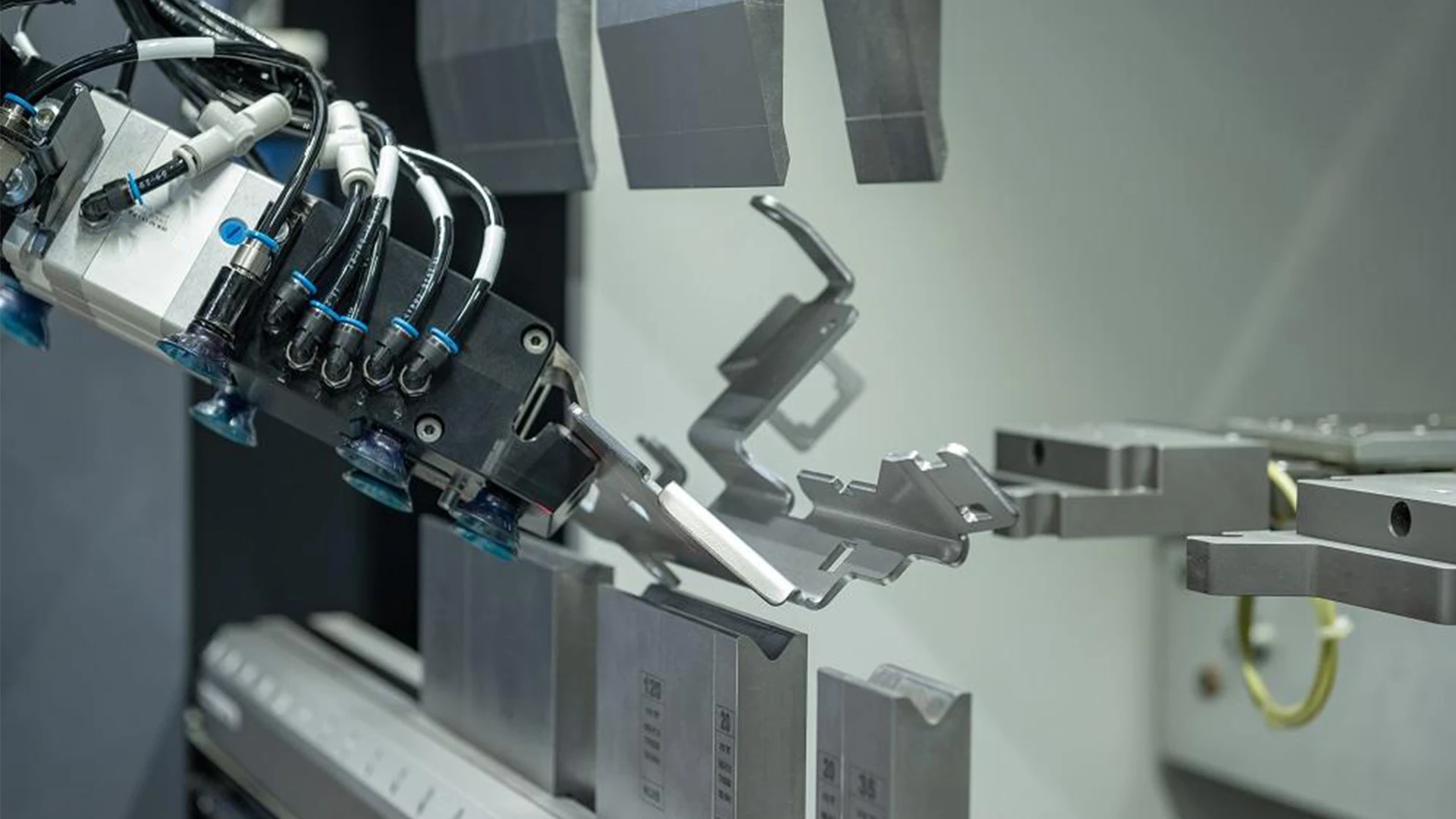
Backgauges, sheet followers, and full robotic cells are where the biggest productivity leaps occur.
- 4-6 axis backgauge: +$5,000–$15,000
- Sheet followers / material handling: Moderate adder, high ROI in high-volume
- Full robotic bending cell: Press brake + robot = $100,000 – $450,000+ total
In 2026, shops facing labor shortages report 2-3x throughput with robotic cells despite the higher capital outlay.
7. Brand Reputation, Manufacturing Origin & Build Quality
Origin still creates the widest price spreads.
Brand / Origin Price Ranges (2026 examples)
| Origin / Brand Example | Typical Price Range | Strengths | Considerations |
| European (Trumpf, Bystronic, Prima Power) | $80,000 – $500,000+ | Premium engineering, best support | Highest initial cost |
| Japanese (Amada) | $50,000 – $250,000 | Reliability, advanced tech | Strong but premium |
| Turkish / Chinese (Durma, YSD, etc.) | $20,000 – $150,000 | Best value, improving quality | Service network varies |
| American | Competitive mid-high | Local support, customization | Balanced |
Explore the 2026 ranking and detailed strengths of top press brake brands
European machines often cost 2-3× Chinese equivalents but deliver superior longevity and resale value.
Additional Factors That Influence Final Price
- Safety features (laser guards, light curtains): $2,000–$10,000 but mandatory for OSHA/CE compliance.
- Tooling packages & quick-change systems: $2,000–$15,000+; precision sets reduce setup time dramatically.
- Frame construction & precision specs: Heavier welded frames and high-resolution scales add cost but reduce vibration and improve repeatability.
- Energy-efficiency options (regenerative drives, idle modes): Pay for themselves quickly.
2026 Press Brake Price Trends
- Electric & hybrid surge: Now 30-40% of new sales due to energy costs and regulations.
- Automation acceleration: Robotic cells growing fastest as labor shortages persist.
- Raw material inflation: Standard 100-ton CNC models up ~15% since 2021.
- SME-friendly electric models: Entry-level servo machines now available under $60,000.
- TCO focus: Buyers increasingly demand 5-year operating cost projections.
How to Evaluate Total Cost of Ownership (TCO)
Purchase price is only 40-60% of lifetime cost. A simple TCO model:
5-Year TCO Formula TCO = Purchase Price + (Energy Costs × 5) + Maintenance + Tooling + Downtime/Labor
Example ROI Calculation (200-ton, 4m machine, 2-shift operation)
| Kennzahl | Hydraulisch | Hybrid/Electric | Savings |
| Purchase Price | $45,000 | $65,000 | –$20,000 |
| Annual Energy Cost | $12,000 | $5,000 | +$7,000/yr |
| Annual Maintenance | $3,500 | $1,200 | +$2,300/yr |
| 5-Year TCO | $112,500 | $92,000 | +$20,500 |
| Payback Period | – | 2.8 years | – |
Use this framework (or request vendor TCO spreadsheets) to compare quotes apples-to-apples.
Press Brake Selection Checklist
1.Define exact tonnage & length needs (never overspecify).
2.Calculate 5-year TCO, not just sticker price.
3.Prioritize CNC level and crowning for your part mix.
4.Match drive type to energy costs and duty cycle.
5.Evaluate brand service network in your region.
6.Request demo parts and full automation options.
7.Negotiate tooling, training, and extended warranty in the package.Avoid costly pitfalls when investing in a press brake—common mistakes in 2026 include overspecifying tonnage, underestimating automation needs, and focusing only on sticker price.Read: Common Press Brake Buying Mistakes (and How to Avoid Them).
Press brake maintenance and repair should be viewed as an ongoing process rather than a reaction to failure. Proper lubrication, careful hydraulic system management, and regular mechanical inspection form the foundation of reliable machine operation. These practices not only reduce downtime but also help maintain consistent bending accuracy over the machine’s service life.
In 2026, the “right” press brake price is the one that delivers the lowest TCO while meeting your precision, volume, and sustainability goals. By focusing on the seven core variables above and running proper TCO calculations, fabricators can avoid overpaying for unused capacity or underinvesting in efficiency features that would pay for themselves quickly.
Whether you need a budget-friendly 100-ton hydraulic workhorse or a fully automated electric cell for lights-out production, the data is clear: informed buyers consistently achieve 20-40% better lifetime value.
Ready to compare real 2026 quotes against your parts? Download a free TCO calculator or request a customized configuration from multiple suppliers—most will provide side-by-side breakdowns within 48 hours.
This guide is for educational purposes. Always verify current pricing and specifications directly with manufacturers, as market conditions can shift.
FAQ
What are the primary factors affecting press brake price in 2026?
Tonnage (40-60%), bed length, CNC level, drive system, crowning, automation, and brand origin.
How much does a 100-200 ton CNC press brake cost in 2026?
Typically $22,000–$80,000 depending on origin, CNC sophistication, and drive type.
Are electric press brakes worth the higher upfront cost?
Yes for most shops—50-70% energy savings and lower maintenance usually deliver ROI in 2-3 years.
What is the biggest hidden cost in press brakes?
Energy consumption and downtime in hydraulic models; TCO analysis reveals these quickly.
How important is automatic crowning?
Critical for beds longer than 4 meters or tight tolerances—improves consistency by ~25%.